
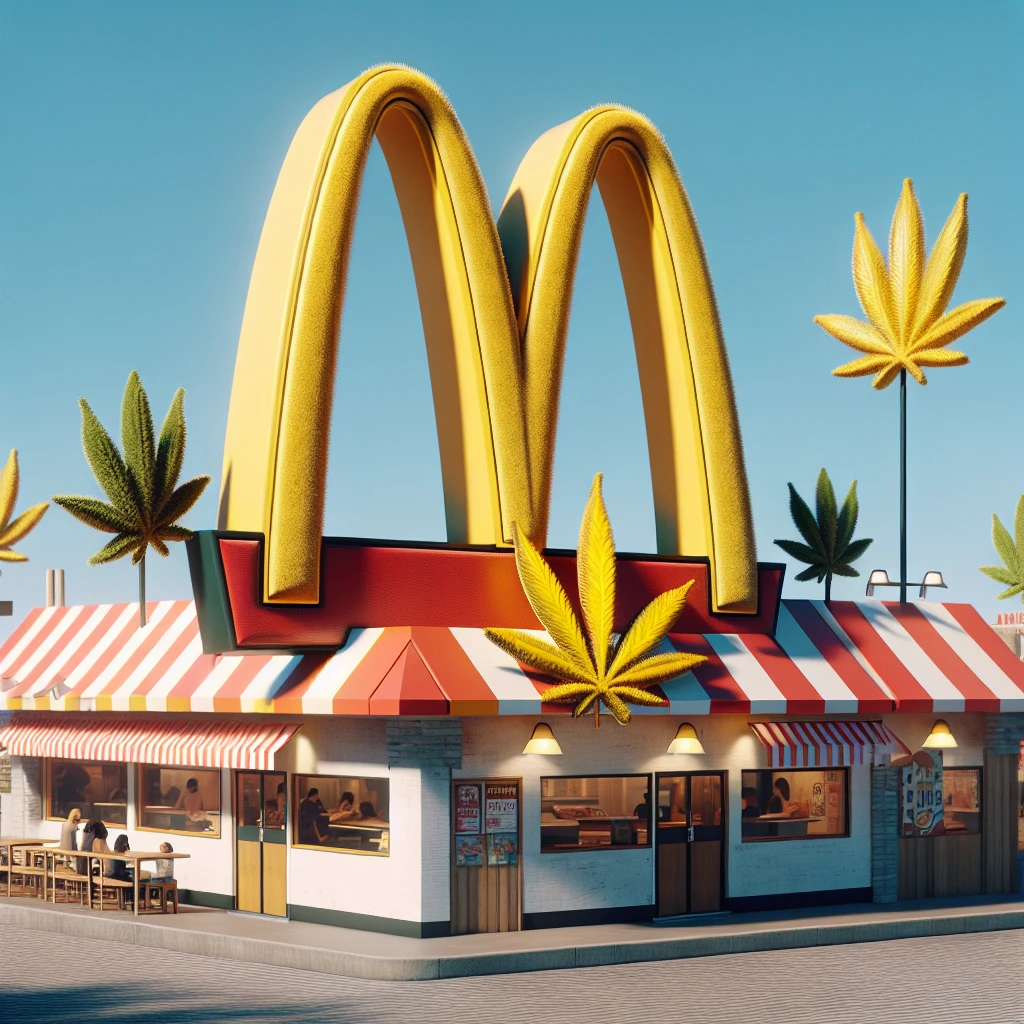
Understanding the Unstoppable Rise of McCannabis
Have you ever wondered why mccannabis is suddenly the hottest topic in global retail discussions? You are definitely not alone. I was walking down Khreshchatyk Street in Kyiv just the other day, grabbing a quick coffee from a highly automated kiosk, and I noticed how incredibly standardized every single new shop has become. The days of quirky, unpredictable local retail spaces are shifting rapidly. A good friend of mine works in global retail analytics, and we ended up standing right there on the sidewalk having a massive debate about the corporatization of everything we consume. That specific chat got me thinking about this entirely new wave of franchise-style dispensaries sweeping across Western markets. The concept of a hyper-standardized, fast-food-style approach to this specific industry is changing the rules of the game permanently. By taking the guesswork completely out of the equation, these massive corporate operators are doing for this sector exactly what global burger chains did for fast food decades ago. You get the exact same product, the exact same branding, and the exact same customer service whether you are in a bustling metropolis or a quiet suburban town. We are witnessing a total restructuring of consumer habits. Let me explain exactly how this system works, why people are either fiercely defending it or completely opposing it, and what it actually means for your wallet moving forward.
The Core Mechanics of Corporate Retail
The core concept revolves around the absolute standardization of a product that used to be wildly unpredictable. For decades, purchasing from a local supplier meant you never truly knew what you were getting. Quality varied depending on the grower. Prices fluctuated wildly depending on the season, the weather, or the specific harvest yield. Enter the franchise model. This highly calibrated system applies extreme corporate efficiency to cultivation, packaging, and retail distribution. You walk into a brightly lit store, tap your order on a sleek touchscreen kiosk, and walk out sixty seconds later with a perfectly uniform product packed in branded, tamper-proof packaging. It operates with military precision.
Let us observe a direct comparison to understand the sheer scale of this shift. Here is how the different avenues stack up against each other.
| Feature | Traditional Dispensary | The McCannabis Model | Underground Market |
|---|---|---|---|
| Product Consistency | Varies by harvest and local grower | Perfectly uniform nationwide | Completely unpredictable and risky |
| Pricing Structure | Premium, artisanal rates based on rarity | Value-menu, bulk-discount pricing | Haggling and volume-based deals |
| Customer Experience | Consultative, slow-paced, personalized | Express kiosks, drive-thrus, apps | Informal, lacking any regulation |
The true value proposition here is heavily reliant on predictability and speed. Think about two specific examples. First, look at the busy corporate traveler. A professional landing in a new city does not have the time to research boutique shops or talk to a consultant for thirty minutes. They want a brand they recognize instantly, knowing the exact dosage and effect of what they are purchasing so they can relax at their hotel. Second, consider the consumer on a strict budget. They rely entirely on mass-produced, heavily discounted standardized goods that do not change in formula from month to month, ensuring their money goes exactly as far as they planned.
Here are the three foundational pillars driving this specific business model forward:
- Relentless Homogenization: Every single plant is genetically identical, grown in massive automated facilities to ensure zero variation in the final output. You will never find a batch that tastes or feels different from the last.
- Optimized Supply Chains: Corporate giants use advanced predictive algorithms to stock exactly what is needed, minimizing waste and completely eliminating stockouts at the retail level. If a store in Seattle needs more inventory, algorithms adjust shipping routes automatically.
- Frictionless Transactions: App-based ordering, automated locker pickups, and drive-thru windows make the actual purchasing process practically instantaneous. You barely even need to speak to a human being.
The Humble Origins of the Franchise Concept
The origins of this corporatized approach did not happen overnight. In the early days of legalization, the market was dominated entirely by legacy growers and passionate enthusiasts who cared deeply about the craft. The environment felt very localized, almost like a farmer’s market. However, as the legal framework began to stabilize, smart money started watching from the sidelines. The term was initially used as a joke by legacy operators to mock the early attempts at creating chain stores. They laughed at the idea of drive-thru windows and generic packaging. But the joke stopped being funny when those exact chain stores started pulling in billions in revenue. Investors saw an incredibly fragmented market begging for consolidation and consistency.
The Evolution of Retail Strategies
As the years went by, venture capital poured endless amounts of cash into the sector. Independent operators simply could not compete with the massive marketing budgets and economies of scale that the corporate entities brought to the table. The evolution of the retail strategy moved from cozy, dimly lit shops with hand-written labels to massive, Apple-store-like environments. They introduced loyalty apps, digital menus, and massive highway billboards. The goal was to remove the stigma entirely and replace it with a sanitized, highly approachable consumer experience. They wanted middle-class suburbanites to feel just as comfortable walking in as they would at a massive grocery store chain.
The Modern State of Franchises in 2026
Now that we are solidly in 2026, the retail landscape has completely shifted. The massive multi-state operators have essentially swallowed up the mid-tier market. You see massive distribution hubs that look exactly like Amazon fulfillment centers. The corporate models have fully optimized their tax structures and lobbying efforts, making them incredibly powerful political entities as well. While artisanal growers still exist for the high-end connoisseurs, the vast majority of everyday consumers are opting for the speed, low cost, and reliability of the corporate giants. It is a true testament to the power of capitalist efficiency applied to a newly emerging sector.
Supply Chain Mechanics
To truly grasp how these companies operate, you have to look under the hood at their supply chain mechanics. It is honestly mind-blowing. These corporations do not rely on soil and sunshine in the traditional sense. They use massive, multi-million-dollar indoor hydroponic facilities. Every drop of water, every lumen of light, and every nutrient is strictly controlled by central computers. When a crop is ready, it is harvested using automated trimming machines rather than hand labor. This massive reduction in labor costs is exactly how they manage to undercut the local growers on price. Furthermore, their logistics networks are tracked via blockchain to ensure absolute compliance with state tracing laws from the moment a seed is planted to the moment a customer scans their receipt.
Standardization Protocols
The science of standardization is where the real magic happens. Maintaining exactly the same ratio of active compounds across millions of units requires pharmaceutical-grade precision. They don’t just hope for the best; they engineer the outcome. Let me list some of the specific scientific protocols they use to keep everything perfectly uniform:
- Gas Chromatography Testing: Every single batch is run through rigorous lab testing to ensure the exact chemical profile matches the corporate standard. If a batch is even slightly off, it gets diverted into secondary processing.
- Tissue Culture Cloning: Instead of growing from seeds, which introduce genetic variability, these companies clone a single “mother” plant millions of times. This means every plant is an exact genetic replica of the original.
- Automated Climate Control: The facilities use sophisticated HVAC systems to mimic the perfect day, every day. The humidity, temperature, and airflow never fluctuate, completely eliminating environmental stress on the products.
Day 1: Brand Audit
If you want to truly understand how these corporate giants operate, you need a solid plan. Start your first day by conducting a simple brand audit. Look at the major chains in your specific region. Browse their websites and notice how identical the user interfaces are. They all use clean, minimalist fonts, bright colors, and heavily emphasize wellness and lifestyle rather than the counter-culture roots of the past. Take notes on which brands seem to dominate the digital advertising space.
Day 2: Quality Check
On the second day, pay a visit to one of these locations, or at least review their digital menus. Focus specifically on the entry-level products. Notice how the packaging is completely opaque, heavily branded, and child-proofed to the extreme. The quality check isn’t about finding the best product; it is about finding the most consistent one. Everything is designed to sit on a shelf for months without degrading.
Day 3: Price Compare
Day three is all about the numbers. Open up a spreadsheet and compare the prices of the corporate franchise against a local, independent operator. You will quickly notice the sheer power of economies of scale. The giant chains can offer massive bundles, “buy-one-get-one” deals, and aggressively low prices on bulk items. Independent stores simply cannot afford to take those kinds of losses to acquire customers.
Day 4: App Integration
Download the official application for one of these franchises. They want you inside their digital ecosystem. You will see features like real-time inventory tracking, personalized recommendations based on your past purchases, and push notifications for flash sales. It is exactly the same technology used by global coffee chains to keep you coming back every single morning.
Day 5: Loyalty Program Analysis
Look deeply at their loyalty programs. These companies are desperate for user data. By offering you a five percent discount, they are tracking exactly when you buy, what you buy, and how often you visit. They use this massive pool of big data to adjust their cultivation schedules and marketing efforts. Your purchasing habits directly influence what they decide to grow next quarter.
Day 6: Eco-Footprint Check
This is where things get a bit tricky for the corporate giants. Spend day six looking into their sustainability reports. While they boast about efficiency, massive indoor facilities consume absurd amounts of electricity. The single-use plastic packaging required by law creates mountains of waste. It is a major vulnerability for these brands, and seeing how they attempt to greenwash their image is a fascinating exercise.
Day 7: Final Verdict
By day seven, you have enough information to make your final call. Are you a fan of the absolute convenience and rock-bottom prices, or does the loss of local charm and environmental impact push you away? Compile your thoughts. Understanding this ecosystem makes you a much more informed consumer, allowing you to vote with your wallet intelligently.
Navigating the Myths and Realities
Myth: Corporate products are always extremely low quality and full of chemicals. Reality: While they might lack the artisanal care of a small-batch grower, these products are actually subject to the strictest testing standards in the industry. They are highly clean and safe, just somewhat generic in their profile.
Myth: The massive chains have completely killed all independent growers. Reality: Not exactly. Much like the craft beer industry surviving alongside massive domestic beer brands, there is still a very healthy, premium market for high-end, craft products. People are still willing to pay a premium for uniqueness.
Myth: Prices are higher because of the fancy stores and massive marketing campaigns. Reality: The massive scale of these operations actually drives the baseline prices down significantly. Their entire business model is built on high volume and low margins to freeze out smaller competitors.
Myth: The products are purely artificial and synthetic. Reality: It is still an agricultural product grown from the earth. The process is simply managed with industrial precision rather than relying on the whims of nature.
What exactly is this franchise concept?
It is the application of fast-food retail strategies—extreme standardization, app ordering, loyalty programs, and uniform branding—applied to the modern dispensary landscape.
Who owns these massive networks?
They are primarily owned by large Multi-State Operators (MSOs) backed by heavy private equity and venture capital firms. They operate across dozens of jurisdictions simultaneously.
Is it legal everywhere?
No. The legality remains highly fragmented depending entirely on your specific region, state, or country. These massive chains only operate in tightly regulated, fully legal markets.
Can everyday people invest in these chains?
Yes. Many of the largest operators are publicly traded companies. You can buy their stock through standard brokerage accounts, though the market remains quite volatile.
Does this hurt local mom-and-pop shops?
Undeniably, yes. Smaller shops struggle to compete with the aggressively low pricing and massive marketing budgets of the corporate giants, forcing many to either close or pivot to hyper-niche markets.
What about rare, craft strains?
You will rarely find unique, delicate varieties at these massive chains. They focus purely on high-yield, disease-resistant genetics that appeal to the broadest possible demographic.
How do they handle sustainable packaging?
Poorly, for the most part. Due to strict legal requirements regarding child-proofing and labeling, the industry relies heavily on thick, single-use plastics, creating significant environmental concerns.
Will they ever operate globally?
As international laws slowly loosen, these massive corporations are absolutely positioning themselves to expand globally, hoping to become recognizable worldwide brands.
The era of standardized corporate retail is here, and it is reshaping our communities at blinding speed. Whether you love the unshakeable consistency and budget-friendly pricing, or you deeply miss the personal touch of independent local shops, this business model is undoubtedly the new normal. Keep observing the market, stay educated on what you are actually purchasing, and always demand better sustainability practices from the brands you support. If you found this breakdown helpful, share it with a friend and start a conversation about where retail is heading next!