
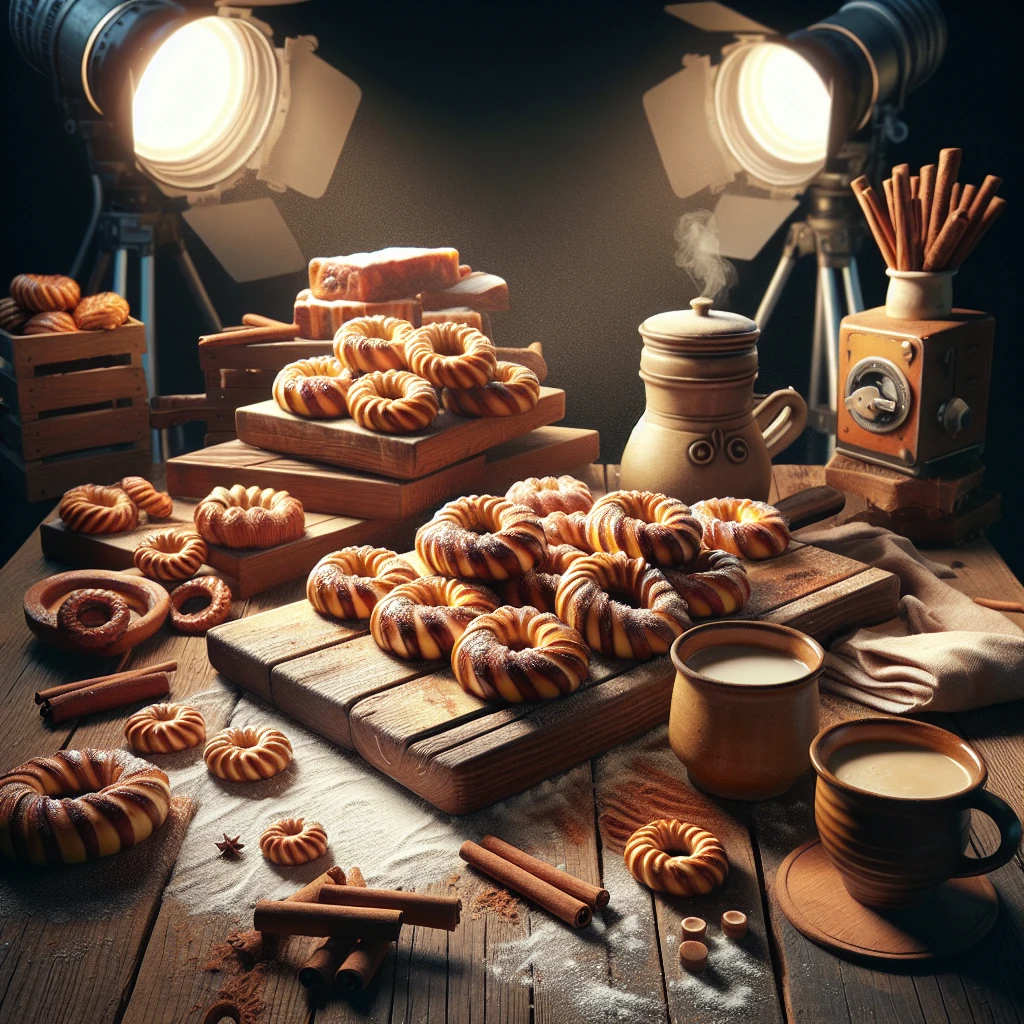
The Magic Behind Holey Confections
Ever wondered why some of the absolute best baked goods are actually missing their centers, making holey confections the ultimate comfort food? It is a funny thought when you sit down with a hot cup of coffee to really think about it. You are literally paying for a missing piece of dough. But honestly, that empty space is exactly where the culinary magic happens. I remember sitting in a tiny, dimly lit cafe right off Khreshchatyk Street in Kyiv during a fiercely chilly November afternoon. The wind was howling outside, but inside, the barista handed me a perfectly glazed ring pastry, warm, heavy, and intensely fragrant with real vanilla bean. That specific bite completely changed how I view baking. The missing center was not a loss at all; it was a pure masterclass in texture optimization. We so often obsess over heavily stuffed pastries, but ring-shaped treats offer an unparalleled crust-to-crumb ratio that no solid bun can ever hope to achieve.
This guide breaks down exactly why these specific treats absolutely dominate our cravings on a global scale. We will walk through everything from the crisp outer layers to the tender, airy insides that make them so irresistible. Grab your favorite mug, settle in, and explore the glorious science, rich history, and undeniable charm of these ring-shaped desserts that have captured hearts everywhere. Whether you are grabbing a quick bite on a busy weekday morning or savoring a slow weekend brunch, the experience is universally beloved. The tactile joy of holding a perfectly round pastry, breaking it apart gently, and seeing the web-like gluten structure inside is truly unmatched in the pastry world.
The Core Culinary Concept
So, what makes these treats so incredibly special structurally? The architecture of a ring-shaped dessert is pure genius. By creating a hole in the middle of the dough, bakers effectively solve one of the oldest and most frustrating culinary problems: raw, gummy centers. When you fry or bake a particularly thick piece of dough, the outside inevitably burns before the inside has a chance to fully cook. The hole maximizes the overall surface area, allowing high heat to penetrate evenly from all sides simultaneously.
Here is a quick breakdown of the most popular variations across the globe.
| Confection Type | Primary Cooking Method | Texture Profile |
|---|---|---|
| Classic Yeast Donut | Deep Frying | Light, airy, slightly chewy with distinct yeast notes |
| Old Fashioned Cake Ring | Deep Frying | Dense, crumbly, heavy crust with deep flavor crevices |
| Sweet Brioche Crown | Oven Baking | Soft, rich, buttery interior with a tender, glossy crust |
The real value here lies heavily in the sensory experience. For example, a freshly fried Spanish churro formed into a loop gives you double the crunch per bite compared to a solid, straight bun. Another perfect example is the French Paris-Brest; the ring shape allows for maximum praline cream filling while maintaining a crisp choux pastry shell that simply will not collapse under its own substantial weight. The structural integrity provided by the circle is astounding.
Here are the primary reasons you should start baking them at home:
- Superior heat distribution: You rarely have to worry about gooey, undercooked dough ruining an entire expensive batch of ingredients.
- Maximum flavor coating: More surface area simply means more space for glazes, heavy cinnamon sugar, or rich chocolate ganache to stick properly.
- Unbeatable visual appeal: There is something inherently satisfying and professional about a perfectly symmetrical ring sitting on a bakery display or your kitchen counter.
- Interactive preparation: They are incredibly fun to make with kids, as punching out the center dough is always a highly requested kitchen activity.
Baking them is essentially a structural hack for better texture and flavor balance. You get a beautiful, golden crust on every single edge, which contrasts perfectly with the soft, steamy crumb inside.
Origins of the Ring Shape
Let’s travel back in time for a moment. The concept of frying or baking dough with a central hole is far from a modern invention. Culinary historians trace the earliest iterations back to ancient civilizations. Native American tribes were known to fry ring-shaped dough in natural animal oils long before European settlers arrived on the continent. Meanwhile, in 19th-century America, a sailor named Hanson Gregory famously claimed to have invented the classic donut hole. Frustrated with the raw, doughy centers of his mother’s fried cakes while navigating rough storms, he allegedly used the ship’s tin pepper box to punch a hole right in the middle of the dough. Whether you choose to believe the nautical legend or not, the functional brilliance of this method quickly caught on globally.
Evolution of the Craft
As the centuries passed, the technique evolved rapidly from a mere practical fix to a highly respected culinary art form. During World War I, brave volunteers known affectionately as ‘Doughnut Lassies’ served these comforting treats to homesick soldiers directly on the front lines, cementing their status as an ultimate symbol of home and comfort. The mid-20th century saw the massive rise of automated ring-making machines, notably showcased at events like the 1933 Chicago World’s Fair. These fascinating machines allowed bakeries to mass-produce uniform, golden circles right in front of mesmerized crowds. Suddenly, what was once a labor-intensive, messy kitchen chore became an accessible, cheap daily staple for the working class.
Modern State
Fast forward to 2026, and the pastry landscape has completely exploded. We are no longer just looking at simple pink sugar glazes and sprinkles. Artisanal bakers are aggressively pushing boundaries with long sourdough fermentation, chewy mochi flour bases, and highly complex savory-sweet flavor profiles. The modern bakery scene treats the ring shape as an ultimate blank canvas. From earthy matcha-infused doughs to complex hibiscus and passionfruit glazes, the humble ring has been thoroughly elevated to gourmet status, proving time and time again that a brilliant structural design will always stand the strict test of time.
Thermodynamics of Baking and Frying
Why exactly does the missing center completely change the baking game? It all comes down to basic thermodynamics. When dough hits hot oil or a scorching hot oven, heat transfers from the outside in. In a solid, thick sphere, the heat takes far too long to reach the core. The ring shape effectively halves the distance the heat needs to travel. This rapid heat transfer causes the trapped moisture inside the dough to turn into vaporized steam much faster, creating those beautiful, airy, microscopic pockets we all love. It is literally a feat of thermal engineering applied directly to your morning breakfast routine.
The Maillard Reaction Matrix
The crust is absolutely where the real flavor lives, thanks entirely to the Maillard reaction. This is the complex chemical reaction between amino acids and reducing sugars that gives browned, cooked food its distinctive, savory flavor. By increasing the overall surface area through that central hole, you are exponentially increasing the total number of Maillard reactions happening simultaneously across the pastry.
Here is the hard science behind the perfect bite:
- Increased Surface Area: A standard ring shape has roughly twenty percent more surface area than a solid round bun of the exact same dough volume, allowing for significantly more caramelization.
- Rapid Starch Gelatinization: The much quicker internal heating ensures that the starches swell and set structurally before the outer crust becomes too tough or burnt.
- Moisture Evaporation Control: The central chimney effect allows pressurized steam to escape evenly, preventing the pastry from becoming soggy or severely deflating upon cooling on the rack.
- Optimal Lipid Absorption: In fried versions, the increased surface area means a slightly higher fat absorption rate, which beautifully acts as a flavor carrier and heavily contributes to the melt-in-the-mouth sensation.
Understanding these specific mechanics gives you the incredible power to manipulate your recipes at home. If you want a crunchier exterior, simply widen the center hole to expose more raw dough to direct heat. Conversely, if you prefer a softer, pillowy texture, keep the hole relatively small.
Day 1: Gathering and Prep
Ready to master these treats in your own kitchen? Here is a foolproof 7-day progression plan to take you from a curious beginner to a highly confident pastry chef. Start by sourcing high-quality ingredients. You will need strong bread flour for adequate structure, fresh active dry yeast, high-fat European butter, and a highly reliable deep-fry thermometer. Get your tools organized; a proper stainless steel ring cutter is absolutely essential for clean edges.
Day 2: Mastering the Master Dough
Today is all about the initial mix. Combine your wet and dry ingredients, focusing heavily on developing the gluten strands. Knead the dough until it smoothly passes the windowpane test without tearing. Let it rest tightly covered overnight in the fridge. This slow, cold fermentation develops a deep, wonderfully complex flavor profile that quick recipes simply cannot match.
Day 3: The Art of Shaping
Take your chilled dough out and roll it to a consistent half-inch thickness. Punch out your circles cleanly and confidently. The major trick is to flour your cutter heavily and press straight down without twisting your wrist. Twisting aggressively seals the outer edges and absolutely prevents an even, beautiful rise during the cooking process.
Day 4: Proofing Perfection
Proper proofing is entirely non-negotiable. Place your shaped rings on individual, pre-cut squares of parchment paper. Let them rise in a warm, perfectly draft-free spot until they are ultra-jiggly to the touch and have fully doubled in size. Do not rush this step, or you will end up with dense hockey pucks.
Day 5: The Fry Deep Dive
Heat your chosen neutral oil to exactly 350°F (175°C). Drop the dough in gently, using the parchment paper squares to transfer them without deflating the precious airy structure. Fry for about two solid minutes per side until deeply golden brown. Watch the temperature closely, as adding dough quickly drops the heat of the oil.
Day 6: Glazing and Decorating
Let the pastries cool slightly on a wire rack before dipping. Make a classic, rich vanilla bean glaze using sifted confectioners’ sugar, whole milk, and real vanilla paste. Dip them while they are still slightly warm so the wet glaze forms a perfectly sheer, crackly coating that shatters wonderfully when you bite into it.
Day 7: The Tasting and Tweaking
Invite your friends over for a comprehensive tasting session. Analyze the internal crumb structure together. Was it slightly too dense? Next time, let it proof for an extra twenty minutes. Too greasy? Make sure your oil temperature stays consistently high. Baking is a constant, rewarding journey of refinement and subtle adjustments.
Myths and Realities
There is a massive amount of misinformation out there about making these treats. Let’s clear the air right now.
Myth: You absolutely need highly expensive, professional bakery equipment to make a proper ring pastry at home.
Reality: A standard heavy-bottomed pot, a cheap digital thermometer, and two simple round cookie cutters are literally all you need for flawless, bakery-level results.
Myth: Baking them in the oven instead of frying yields the exact same texture but healthier.
Reality: Baked versions are essentially delicious ring-shaped cakes. They entirely lack the distinct, crispy, oil-seared crust that only deep-frying can provide through rapid surface dehydration.
Myth: The leftover center holes should be immediately thrown away or aggressively reworked back into the main dough block.
Reality: Reworking fermented dough makes it incredibly tough and chewy. Those little center cutouts should be fried exactly as they are to create bite-sized, incredibly tender treats that often cook much faster. Many people actually prefer these over the main pastry itself!
Can I use a sourdough starter instead of commercial yeast?
Absolutely. It adds incredible flavor depth and a pleasant tang, but be aware that it requires significantly longer proofing times, often up to twelve hours.
What is the absolute best oil for frying?
Canola, peanut, or sunflower oil work best due to their extremely high smoke points and completely neutral flavor profiles that will not mask the dough.
How long do they truly stay fresh?
They are fundamentally best eaten within six hours of cooking. After that tight window, they begin to stale rapidly due to natural moisture migration.
Can I freeze the raw dough to save time?
Yes, freeze them right after the shaping stage. Thaw them in the fridge overnight and fully proof them at room temperature before frying.
Why did my pastry suddenly deflate in the oil?
You likely over-proofed the dough, causing the delicate gluten structure to weaken and instantly collapse under the extreme heat.
What if I do not own a specific ring cutter?
A sturdy drinking glass and a smaller shot glass work perfectly as highly effective substitute cutters in a pinch.
How do I keep the sweet glaze from melting off completely?
Ensure the pastry cools for at least five full minutes before dipping, so the glaze actually sets instead of turning into a hot liquid puddle.
Conclusion
There is a very profound reason these iconic treats have fiercely dominated bakery counters for multiple generations. They are the absolute perfect marriage of basic culinary science and pure comfort food. Whether you are craving a simple, classic sugar-dusted ring or a highly complex glazed masterpiece, understanding the physical mechanics behind the shape deeply elevates the entire eating experience. Do not let the frying process intimidate you. Grab your flour, heat up that oil, and start creating your own perfect, golden batch today!