
Why the flying june bug is the Clumsiest Insect Alive
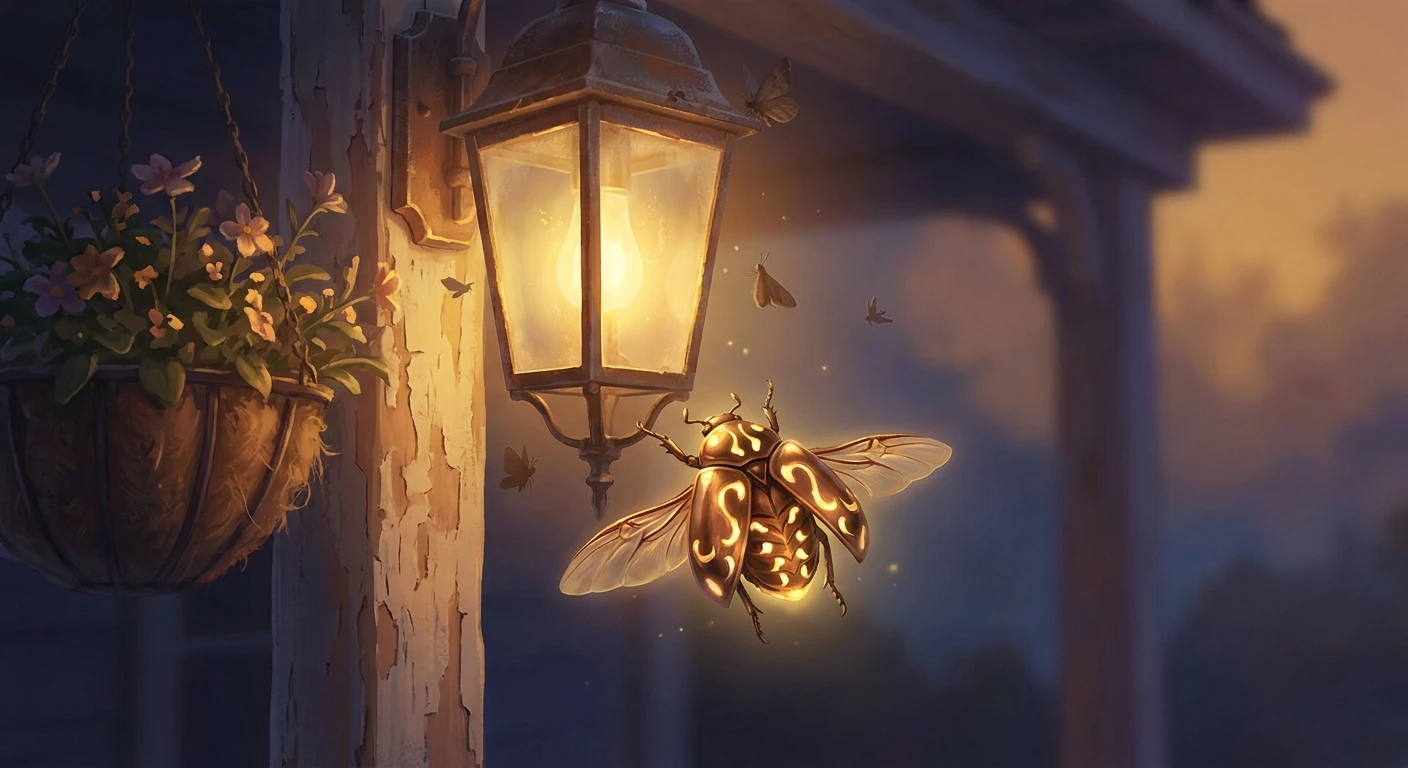
Did you just hear a shockingly loud thud against your window and wonder if a tiny meteor landed, only to find a clumsy flying june bug buzzing frantically around your porch light? I totally get your frustration. These noisy, metallic-looking beetles are completely harmless to you, but they can be super annoying. Understanding their wonderfully weird behavior will definitely help you coexist peacefully with them throughout the warm months. You know, just last summer here in Kyiv, I was sitting out on my balcony enjoying a beautiful, breezy evening. I was completely absorbed in reading a great mystery novel when suddenly one of these little brown tanks crash-landed straight into my hot tea. Talk about a rude awakening! It just sat there floating, looking entirely confused about how it got there. Honestly, they act like they have absolutely zero navigational skills, bumping into walls, screens, and occasionally your forehead. They are basically the distracted drivers of the insect world. But despite their absolute lack of grace in the air, they have a really fascinating lifecycle that happens right under our feet. I want to tell you exactly why they act this way, what they are actually doing in your yard, and how you can stop them from turning your patio into a late-night beetle landing zone. You absolutely do not need expensive chemicals or high-priced pest control experts to deal with them, just a bit of practical knowledge and some easy home adjustments.
The core of the issue with these insects comes down to their biology and how they naturally interact with our brightly lit homes. They are heavily driven by light and very basic survival instincts that override everything else. Knowing their exact patterns is a massive advantage because it helps you protect your delicate lawn from their constantly hungry larvae, while keeping the chaotic adult bugs out of your hair—literally. Let me give you two extremely practical examples. First, if you change your outdoor lighting from glaring bright white to a softer yellow or amber, you will immediately notice a massive drop in the number of beetles swarming your doors at night. Second, if you time your lawn watering correctly and let the soil dry out slightly, you can make your grass much less attractive for the females desperately looking to lay their eggs. It is all about outsmarting their natural programming.
Here is a quick breakdown of what they do, why they do it, and how it directly impacts you and your property:
| Bug Behavior | Biological Reason | Impact on Humans |
|---|---|---|
| Swarming outdoor lights endlessly | Phototaxis (a fatal attraction to UV and bright artificial light) | Annoying, loud buzzing around porches and doors at night |
| Crashing into walls and windows | Extremely heavy bodies and incredibly poor steering capabilities | Loud, startling noises against the glass when you are relaxing |
| Larvae eating deep underground | Need massive amounts of high energy to successfully pupate into adults | Large dead patches of grass ruining your beautiful green lawn |
To really grasp what we are dealing with on a daily basis, here are three main things you need to know about their operations:
- Light attraction is their absolute biggest weakness: They use the soft light of the moon to navigate the wild, so our intensely bright artificial lights completely scramble their internal GPS systems.
- Root feeding is where the real damage happens: The loud adults flying around are just annoying distractions, but their babies (the white grubs) are the ones secretly destroying the roots of your expensive grass.
- Their clumsy flight is dictated by harsh physics: Their bodies are simply way too heavy and thick for their relatively small wing size, making any precise mid-air maneuvers basically impossible.
By simply keeping these three crucial traits in mind, you can save both your evening sanity and your landscaping budget.
Origins of the Species
So, where did these little flying tanks actually originate? The flying june bug belongs to a massively diverse family of insects generally known as scarab beetles. Yes, they are biologically related to the exact same sacred beetles the ancient Egyptians used to worship and carve into jewelry! But instead of rolling balls of dung across the hot desert sands, our local temperate varieties evolved in cooler climates where there is always plenty of rich soil and lush vegetation. They naturally developed in sprawling forested areas and open grasslands where their little grubs could safely feed on the deep roots of wild plants without any human interruption. Long before people started planting manicured, highly maintained lawns, these beetles were just doing their normal thing in the wild. They played an entirely natural role in aerating the heavy soil and serving as a very quick, crunchy snack for wild birds, frogs, and small mammals.
Evolution Through the Decades
As human populations aggressively grew and we started building sprawling, endless suburbs with lush, perfectly watered green grass everywhere, we basically created a five-star luxury resort for these specific beetles. They adapted incredibly well to urban and suburban environments. Over the past few decades, their main populations shifted directly from the wild fields right into our cozy backyards. The incredibly heavy use of bright street lamps and massive porch lights only made things worse, drawing them out of the dark woods and concentrating them heavily right around our front doors. They quickly learned that human habitats offer endless underground buffets for their larvae and plenty of navigational hazards for the adult fliers.
Modern State in 2026
Right now, as we push through the heat of 2026, dealing with these swarming beetles has become a totally normal, expected part of early summer prep. Warmer global springs have actually shifted their emergence schedules slightly, meaning you might start seeing them pinging off your windows a bit earlier in the season than you used to. We have also gotten so much smarter about how we handle them. Instead of spraying toxic, harsh chemicals everywhere like people did in the past, most savvy homeowners now use highly targeted, eco-friendly nematodes to deal with the underground grubs, and smart LED lighting systems to avoid attracting the frantic adults entirely. They are definitely still as clumsy as ever, but we are much better equipped to handle the swarms.
Anatomy of a Clumsy Flier
Let us look closely at the actual biological machinery of this fascinating insect. The purely scientific reason they are so terribly bad at flying boils down to their complex anatomy. They are equipped with thick, heavily hardened front wings called “elytra.” When they want to take off and fly, they have to physically lift these heavy elytra straight up and out of the way to rapidly flap the thin, membranous wings hidden underneath. Because the elytra act exactly like massive air brakes, creating terrible wind drag, the bug is incredibly un-aerodynamic. They basically have the flight profile of a flying brick trying to glide. Combine that major drag with a very heavy abdomen full of eggs or stored fat, and you get an insect that flies exactly like a broken, stalling helicopter. It is pure, chaotic, unforgiving physics.
The Grubs Lifecycle
The hidden science behind their lifecycle is actually surprisingly complex. The frantic adults you see aggressively head-butting your screen door at night are actually at the very tail end of their lives. The vast majority of their existence is spent entirely underground in total darkness. The adult females burrow deep into the soft soil to lay dozens of small eggs. These eggs quickly hatch into tiny, C-shaped white grubs that spend months—or sometimes even up to three full years depending on the specific species and region—chewing relentlessly on plant roots to build up enough energy to pupate.
Here are some genuinely wild scientific facts about their species:
- They exhibit strong positive phototaxis, which is just a fancy science term for being helplessly, uncontrollably drawn to artificial light sources.
- Adults have incredibly specialized antennae that physically fan out like little brown leaves to aggressively detect pheromones from potential mates miles away.
- Their tough exoskeletons contain a complex chitin mixed with special natural proteins that give them that shiny, metallic, almost armored appearance.
- Despite having terrifyingly spiky legs that cling to your shirt, those sharp hooks are strictly designed for gripping plant leaves in the wind, not for harming human skin.
Day 1: Assess Your Lighting
The very first step in taking back your yard is to walk around your house right after sunset. Look very closely at all the exterior lights. Are you currently using blindingly bright white or blue-toned modern LEDs? These cool-toned lights are basically giant neon signs screaming for flying insects to visit. Make a detailed list of every single bulb near your doors and windows that desperately needs swapping. Taking away the beacon is the easiest victory.
Day 2: Inspect the Lawn
Grab a sturdy garden shovel and head straight out to your grass. Look for strange patches that are suddenly turning yellow or brown despite watering. Dig up a tiny square of turf. If you pull it back and see more than five white, soft, C-shaped grubs in a one-square-foot area, you have an active, hungry infestation. This simple test tells you exactly where you need to focus all your lawn care efforts later.
Day 3: Switch to Warm Bulbs
Take the list you made on Day 1 and go directly to the hardware store. Buy specialty “bug lights” or simply opt for warm amber/yellow LED bulbs. Swap them all out today while the sun is still up. Tonight, you will notice an absolutely immediate, massive reduction in the number of flying invaders pinging relentlessly off your walls. It really is that simple to fix the aerial assaults.
Day 4: Natural Repellents
Since they naturally hate very strong botanical smells, mix up a super easy natural spray at home. Grab some plain water, a little drop of dish soap, and a heavy dose of peppermint or concentrated neem oil. Spray this fragrant mixture heavily around your window screens, door frames, and patio porch railings. The intense scent totally messes with their delicate antennae and loudly tells them to look elsewhere for a nighttime hangout spot.
Day 5: Physical Barriers
Check all your existing window screens for tiny holes or tears. These bugs are surprisingly muscular and will easily squeeze through any ripped, loose mesh. Buy a really simple adhesive patch kit and completely seal up any potential entry points. Also, make sure your exterior doors have good, tight weather stripping at the bottom so the bugs cannot just casually crawl under the door gap when they inevitably fall onto your welcome mat.
Day 6: Lawn Treatment Preparation
If you indeed found grubs on Day 2, it is definitely time to order beneficial nematodes. These are fantastic microscopic worms that naturally hunt down and totally eliminate the grubs underground without harming your beautiful plants, pets, or family in any way. Order them quickly online or pick them up from a knowledgeable local garden center so you are fully ready to apply them when the soil is properly wet.
Day 7: Long-Term Monitoring
Now that your entire house is fortified and the tempting lights are finally fixed, set up a simple daily routine. Every single evening, just do a very quick visual sweep of the porch. Keep the lawn reasonably watered, but definitely don’t drown it, because overly soggy, wet soil is prime real estate for female beetles looking for egg-laying spots. Stay vigilant and enjoy your bug-free evenings!
There is a lot of absolute nonsense floating around about these bugs. Let me clear up the most ridiculous rumors immediately.
Myth: They have huge, sharp fangs and absolutely love to bite humans.
Reality: They absolutely cannot bite you. The adults of most of these species do not even have functional mouthparts for biting humans. Those prickly things on their legs are just for holding onto swaying tree branches.
Myth: They are completely blind and use a form of sonar to fly.
Reality: They can actually see just fine, especially when it comes to tracking glowing light. They just fly way too fast for their super heavy bodies to steer properly. There is zero sonar involved.
Myth: The giant adults live for several long years.
Reality: The big, noisy adults only live for a few chaotic weeks! Their entire adult phase is just a giant, rushing scramble to mate and lay eggs before dying.
Myth: Buzzing bug zappers are the absolute best way to get rid of them.
Reality: Zappers actually attract way more beetles to your yard from the whole neighborhood than they ever kill, creating a much bigger mess.
Do they sting?
Nope, they have absolutely no stingers and carry no venom whatsoever.
Are they toxic to dogs?
They are totally non-toxic, but eating way too many crunchy beetles can definitely give your dog a mild upset stomach.
Why do they hit windows?
They are desperately trying to reach the bright indoor lights they can see glowing right through the glass.
Do they eat wood?
Never. They only eat green plant leaves and underground roots, so your home’s structural wood is totally safe.
How long do they live?
Adults only live a few short weeks, but the underground grubs can live and eat for up to three full years.
What eats them?
Wild birds, hungry frogs, skunks, roaming raccoons, and even some larger garden spiders absolutely love snacking on them.
Can they damage crops?
Yes, their very hungry grubs can cause severe, expensive damage to corn and other root-based crops if left completely unchecked.
Are they the exact same as May beetles?
Yes! Depending closely on exactly where you live and what month they emerge, they casually go by both names.
Wrapping this all up, dealing with a flying june bug is basically an annoying rite of passage for surviving the summer season. They are incredibly loud, embarrassingly clumsy, and more than a little annoying, but they are also completely, totally harmless to you personally. Just fix your glaring porch lights, keep a close eye on your grass health, and you won’t have any major, headache-inducing problems. If you found this straightforward guide genuinely helpful, please share it right now with that one friend who always screams and runs away whenever a giant beetle flies by!