Get Ready for the world cup vancouver Experience
Listen up, if you are heading to the world cup vancouver this summer, you absolutely need to hear this before you pack your bags. I remember exactly how I felt stepping off the plane at YVR airport recently. Coming from Kyiv, I am used to beautiful landscapes and intense football passion, but seeing the towering North Shore mountains framed against an ocean inlet while thousands of fans chanted in the terminal was something else entirely. The sheer electric buzz in the air is contagious. This guide is your ultimate blueprint to surviving and thriving during the craziest month this city has ever seen. We are going to break down everything from securing your daily caffeine fix to navigating the massive crowds without losing your mind.
A lot of folks think they can just show up on match day, flash their digital ticket, and breeze into the stadium. That is a rookie mistake. The logistical reality of moving hundreds of thousands of international fans through a dense downtown core requires a solid game plan. You need to know which Skytrain lines actually work, where to grab a quick bite near BC Place without paying tourist trap prices, and how to handle the surprisingly strong Pacific Northwest sun. I am handing you my personal playbook so you can bypass the chaos, save your hard-earned cash, and focus entirely on the beautiful game.
Navigating the City Like a Local
Getting around during a mega-event is an extreme sport on its own. The core value of having a solid transit plan is that you save time and keep your sanity intact. For example, if you rent a car, you will spend two hours stuck on the Cambie Bridge paying astronomical parking fees. Alternatively, if you buy a multi-day Compass Card, you tap your way from your hotel directly to the stadium gates in fifteen minutes. Here is exactly what you are looking at when choosing your daily transport:
| Transit Option | Average Cost | Vibe & Reliability |
|---|---|---|
| Skytrain (Expo/Canada Line) | Very Low | Fast, packed, high energy |
| Ride-Share (Uber/Lyft) | High | Comfortable but awful in traffic |
| Walking/Biking (Seawall) | Free | Scenic, healthy, totally predictable |
Relying on public transit completely changes your experience. You get to sing chants with other fans on the train, avoid the stress of road closures, and actually see the neighborhoods. If you insist on finding last-minute essentials, here are the absolute best strategies to follow:
- Always top up your transit card the night before a match to avoid massive kiosk lines at the station.
- Download offline maps of the downtown core because cell networks will inevitably throttle under the weight of eighty thousand smartphones.
- Identify designated walking corridors marked by city volunteers; they often bypass the heaviest foot traffic zones.
Do not underestimate the sheer volume of humanity that will flood the streets. The smart move is treating the transit system as your personal chauffeur while leaving the heavy lifting to the automated trains. Grab a coffee, tap your card, and just enjoy the ride.
Origins of Vancouver Hosting Mega Events
To truly appreciate what is happening right now, you need a quick history lesson. This city is no stranger to putting on a massive show. It all started back with Expo 86, an event that completely reshaped the downtown waterfront and introduced the iconic geodesic dome of Science World. That exposition proved to the globe that this rainy logging town had morphed into a premier international destination. Fast forward to the 2010 Winter Olympics, and the city proved it could handle the intense security, transit, and hospitality demands of a global sports audience. The infrastructure built for those games laid the absolute foundation for what we are experiencing today.
Evolution of Football in British Columbia
Football, or soccer as the locals stubbornly call it, has a surprisingly rich pedigree here. The Vancouver Whitecaps were founded way back in the 1970s and actually won the Soccer Bowl in 1979, drawing crowds that rivaled the local hockey team. While hockey dominated the cultural narrative for decades, a massive demographic shift brought a deep, authentic love for football back to the forefront. By the time the 2015 Women’s tournament rolled through, breaking attendance records, it was clear the region had evolved into a legitimate football stronghold. The passion you see on the streets today is the result of fifty years of grassroots community building.
Modern State of BC Place
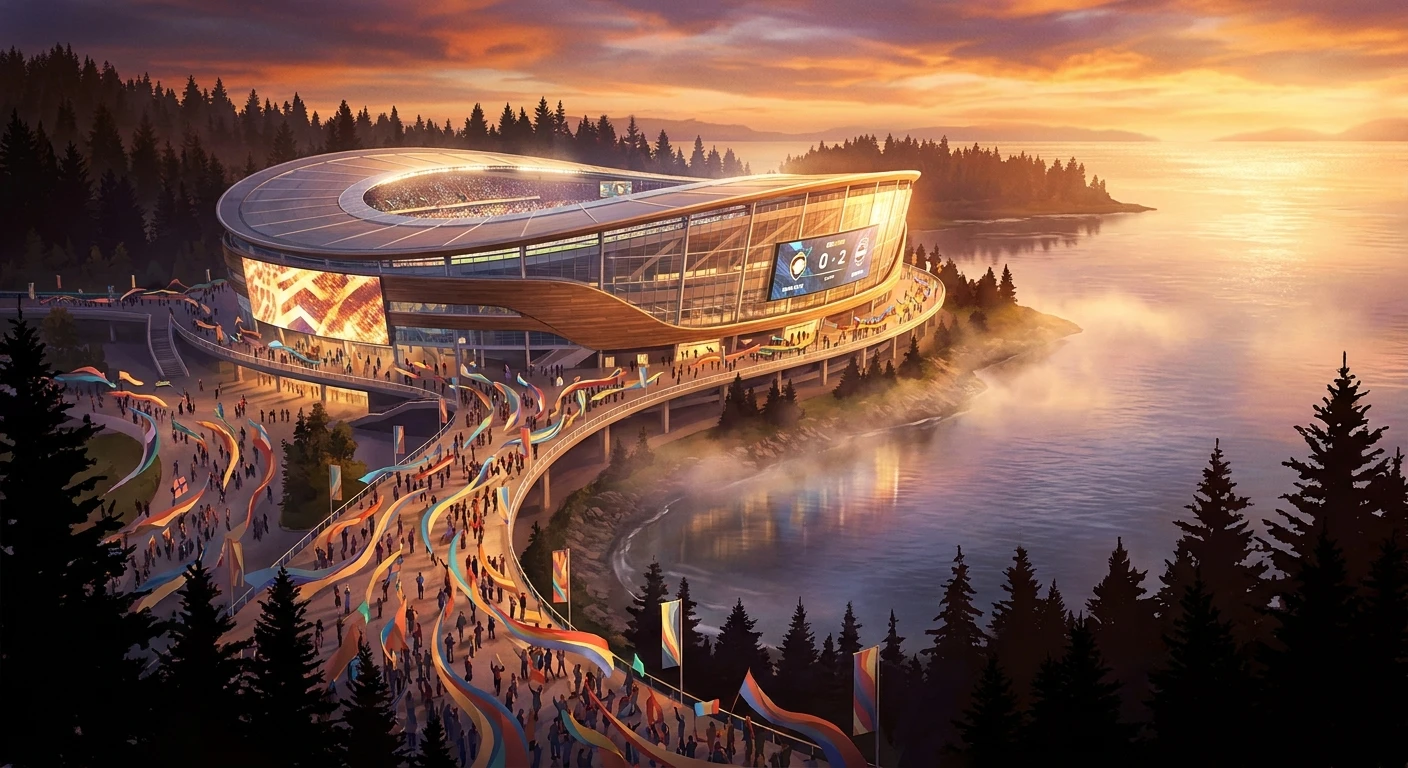
The stadium itself is a masterclass in urban venue evolution. Originally sporting a marshmallow-like air-supported roof, it underwent a massive revitalization. Now, it boasts a stunning cable-supported retractable roof that reveals a massive video board suspended in the center. The facility sits right in the beating heart of the city, meaning you do not have to trek to some distant suburb to catch the action. It is surrounded by high-rises, ocean views, and endless entertainment districts, making it one of the most uniquely situated sporting venues on the planet.
The Engineering Behind the Pitch
Let us talk about what the players are actually running on, because it is an engineering marvel. BC Place traditionally uses artificial turf, which is a massive sticking point for international purists. For this event, they installed a state-of-the-art hybrid grass system. What does that mean? It means they take natural grass and stitch millions of artificial fibers into the soil to anchor the roots. It gives the perfect bounce of natural grass with the absolute durability needed to survive multiple games a week. They literally use giant mechanical sewing machines to inject these fibers into the ground.
Crowd Dynamics and Stadium Logistics
Moving fifty-four thousand screaming fans in and out of a building safely requires heavy science. The city employs advanced crowd flow algorithms to predict exactly where bottlenecks will occur. They use thermal mapping and real-time mobile data pinging to adjust signage and deploy staff dynamically. Here are some wild technical facts about the stadium operation:
- The retractable roof uses a complex tensile structure, opening or closing in exactly twenty minutes to manage unpredictable weather.
- Acoustic baffling is engineered directly into the ceiling panels to trap crowd noise, making it sound twice as loud on the pitch.
- Custom LED grow-lighting rigs are suspended over the field 24/7 on non-match days to simulate sunlight and keep the natural grass alive indoors.
- The HVAC system completely cycles the internal air of the massive dome every hour to maintain optimal humidity for both players and the grass.
Day 1 – Arrival and Acclimatization
Your first day is all about settling the nerves and beating jet lag. Check into your accommodation, drop your bags, and immediately head outside. Walk the Stanley Park Seawall to get fresh ocean air into your lungs. Grab a casual dinner in the West End, hydrate heavily, and get to bed early. Do not push it on day one.
Day 2 – Fan Zone Exploration
Now that you are rested, hit the main downtown fan zones. These areas are completely cordoned off from traffic. You will find massive screens, sponsor activations, and cultural pavilions. Buy your official merchandise today before the best sizes sell out. Spend the afternoon sampling street food from local trucks parked along the perimeter.
Day 3 – Match Day 1 Logistics
It is game day. Eat a massive breakfast because you will be burning calories just walking around. Start migrating toward the stadium district about four hours before kickoff. Soak in the pre-game pub culture in Gastown or Yaletown. When gates open, get inside early to watch the warm-ups and avoid the inevitable security gridlock.
Day 4 – Recovery and Nature Escape
Your voice is probably gone, and your feet hurt. Take a break from the concrete jungle. Take the SeaBus across the inlet to North Vancouver. Visit the suspension bridge or just hike one of the lower mountain trails. Being in the quiet stillness of the ancient cedar forests is the perfect reset button for your nervous system.
Day 5 – Local Pub Culture
Spend this day immersing yourself in the local supporter culture. Head over to Commercial Drive, the historic heart of the city’s Italian and Latin communities. The cafes and bars here bleed football. Sit on a patio with a strong espresso or a local craft beer, watch the non-local matches on small screens, and argue about tactics with the locals.
Day 6 – Match Day 2 Intensity
You know the drill now, but this time, elevate the experience. Join one of the organized supporter marches heading to the stadium. There is nothing quite like walking shoulder-to-shoulder with thousands of chanting fans, flares lighting up the street, police escorts clearing the way. It is pure, unadulterated sporting magic.
Day 7 – Souvenir Run and Departure
Before heading back to YVR, hit up Granville Island early in the morning. Pick up some smoked salmon, local artisan crafts, or maple syrup for folks back home. Take one last look at the mountains, grab a fresh donut from the public market, and jump on the Canada Line to the airport. You survived.
Myth: It rains constantly in the summer.
Reality: People think the Pacific Northwest is just a giant puddle year-round. The truth is, July and August are completely stunning. We are talking weeks of dry, gorgeous 25-degree Celsius weather with absolutely zero humidity. Pack sunscreen, not a raincoat.
Myth: You can just drive and park near the stadium.
Reality: This is a total fantasy. Downtown will be locked down with hard security perimeters. The few parking garages available will charge prices that make your eyes water. Stick to the Skytrain or walk; do not even bother renting a car for city days.
Myth: It is impossible to get tickets now.
Reality: While the primary drops sold out in minutes, the official resale portals constantly fluctuate. Corporate sponsors often return unused allocations 48 hours before kickoff. If you are patient and monitor the official apps, you can absolutely secure a seat.
Myth: The city only cares about hockey.
Reality: While the Canucks are a religion, the demographic makeup of the city has completely shifted. With massive European, South American, and Asian populations, the football culture here is deeply embedded and incredibly fierce. The passion is totally genuine.
Where is the main fan zone located?
The primary official viewing and fan festival area is typically situated around Concord Pacific Place and the Plaza of Nations, right along the waterfront just steps away from the stadium.
Can I drink beer in public areas?
Generally, drinking alcohol in public parks and streets is strictly prohibited and heavily fined, though the city may designate specific, highly controlled beer garden zones for the event.
Are bags allowed inside the venue?
You must adhere to a very strict clear-bag policy. Small clutch purses are usually fine, but leave backpacks, oversized totes, and large camera bags at your hotel.
How early should I arrive before kickoff?
Aim to be at the security perimeter at least two and a half hours before the match starts. The queues will be massive, and you do not want to miss the national anthems.
Is the Skytrain running 24/7?
No, the train usually stops running around 1:00 AM. However, transit authorities significantly extend hours and increase train frequencies during major evening matches.
What is the best local food to try?
You absolutely must try Vancouver’s famous sushi. Because of the coastal location, the seafood is unbelievably fresh and surprisingly affordable compared to other major global cities.
Are there mobile charging stations?
Yes, there will be sponsor-provided charging hubs in the fan zones, but you should absolutely bring your own high-capacity portable power bank to be safe.
Do I need a special visa for Canada?
Depending on your passport, you either need a standard Visitor Visa or an Electronic Travel Authorization (eTA), which you must apply for online before booking your flight.
Can I just use US dollars?
While some tourist traps might accept American cash at a terrible exchange rate, you should tap your credit card for almost everything. Canada is a highly cashless society.
Where can I buy official merchandise?
Official superstores pop up in the fan zones, inside the stadium concourses, and at the airport. Avoid buying cheap scarves from random street corners if you want authentic gear.
Final Thoughts
This 2026 event is going to completely redefine the sporting history of this region. The energy, the logistical scale, and the sheer beauty of the city combining with the world’s biggest tournament is a once-in-a-lifetime collision. You now have the exact blueprint to bypass the headaches and soak in the glory. Share this guide with your travel squad, finalize those flight alerts, and get ready for the trip of a lifetime.