
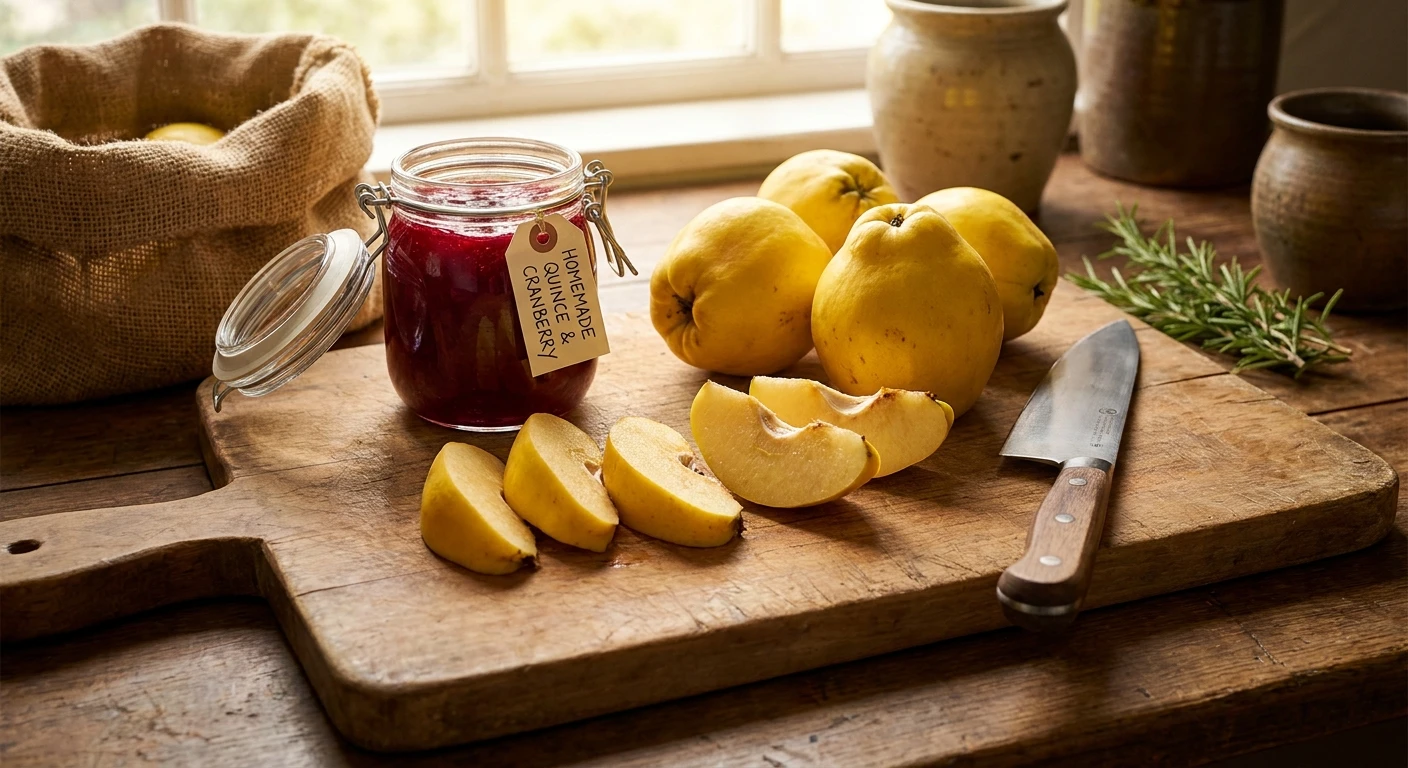
The Ultimate Guide on how to eat quince Without Ruining Your Teeth
So, you bought this strange, fuzzy, lumpy fruit that looks like a cross between an apple and a pear, and now you are desperately trying to figure out how to eat quince without breaking a tooth. Believe me, you are definitely not alone. Back in my grandmother’s kitchen in Kyiv, we had a massive, sprawling tree right by the fence that dropped these heavy golden globes every autumn. As a curious kid, I remember wiping the fuzzy coating off a bright yellow one, taking a huge bite, and instantly regretting my life choices. It was incredibly sour, hard as a rock, and left my mouth feeling like I had just chewed on a cotton ball. That was my harsh, unforgettable introduction to the reality that you almost never consume this fruit raw.
But cooked? Man, that is a completely different story. When prepared correctly, the pale, dense flesh transforms into a ruby red, sweet, and intensely fragrant delicacy that you cannot compare to anything else on earth. I am going to walk you through exactly what this mysterious ingredient is, the absolute best ways to soften it up, and how to turn it from a stubborn rock into an absolute culinary masterpiece. If you follow these instructions, you will become mildly obsessed. Plus, since it is 2026 and everyone is entirely focused on reviving forgotten heritage foods, knowing your way around this ancient ingredient gives you instant bragging rights in the kitchen.
Why bother figuring out the preparation methods instead of just eating an apple? Because the payoff is massive. When you learn the tricks of preparation, you unlock a flavor profile that sits perfectly between a pear, a spiced apple, and a vibrant dash of citrus, all backed by heavy floral notes that make your kitchen smell like a boutique perfume shop.
Let me give you a couple of real-life examples of how this plays out. Imagine serving a slow-roasted, crimson-colored, syrupy slice over a melting scoop of vanilla bean ice cream to your friends at a dinner party. Or picture yourself pairing a thick, sweet slice of homemade paste (known as membrillo) with a sharp, aged Manchego cheese and salty crackers on a cozy Friday night. It instantly elevates any meal from basic to gourmet.
| Preparation Method | Average Cooking Time | Best Culinary Use |
|---|---|---|
| Slow Poaching in Syrup | 1.5 to 2 Hours | Dessert bowls, salads, yogurt toppings |
| Oven Roasting | 2 to 3 Hours | Pork pairings, savory dishes, winter tarts |
| Stovetop Stewing | 45 to 60 Minutes | Homemade jams, compotes, purees |
Before you even turn on the stove, you need to understand the physical mechanics of prepping it. It is not like peeling a soft peach. You are going to need some muscle and the right technique.
- Wash and scrub the skin thoroughly: Place the fruit under warm running water and use your thumbs or a clean sponge to rub off all the greyish-white fuzz. Do not skip this; the fuzz feels terrible in the mouth.
- Core the fruit carefully: You absolutely need a very sharp, sturdy chef’s knife. The core is aggressively dense and gritty. Place the fruit flat on a cutting board, slice it down the middle, and carefully wedge out the woody center and the seeds.
- Submerge in acidulated water: Slice or dice the remaining flesh immediately and drop the pieces into a bowl of cold water mixed with lemon juice. The flesh oxidizes and turns brown ridiculously fast when exposed to air.
If you master these three steps, the rest of the cooking process is an absolute breeze. The initial prep is the only hurdle standing between you and incredible flavor.
The Ancient Origins of the Golden Apple
To really appreciate what you are cooking, we have to look back at where this stubborn fruit came from. Long before apples became the default snack of the Western world, this golden fruit was the absolute ruler of the orchards in the ancient Middle East and Mediterranean. Historians actually believe that the “golden apple” given by Paris to Aphrodite in Greek mythology was not an apple at all, but rather this highly fragrant, lumpy fruit. Cultivated in Mesopotamia and prized by the ancient Greeks in the city of Cydonia (which gave it its botanical name, Cydonia oblonga), it was considered a symbol of love and fertility.
Evolution Across European Kitchens
As empires expanded, so did the reach of these orchards. Romans took the Greek traditions and started preserving the fruit in honey, setting the groundwork for modern jams. By the time the Middle Ages rolled around, it was a staple at grand European banquets. Medieval cooks prized it specifically for its incredibly high pectin content. Before commercial gelatin or powdered pectin existed, if you wanted to make a jelly or a firm fruit paste that could last through the harsh winters, this was your go-to ingredient. The iconic Portuguese marmelada originally meant a paste made from this exact fruit, long before the word “marmalade” became associated with oranges.
The Modern State of Appreciation
Over the last century or so, it lost a lot of ground. As commercial agriculture favored fruits that could be eaten raw right off the tree—like sweet dessert apples and soft pears—our lumpy, hard-to-prep friend got pushed to the backyards of grandmothers and old rural farmsteads. However, food trends are cyclical. Right now, in 2026, we are seeing a massive resurgence. Artisanal chefs, farm-to-table advocates, and enthusiastic home cooks are completely obsessed with bringing it back. It is celebrated as a specialty, seasonal item that demands respect, patience, and a bit of kitchen love.
The Chemistry Behind the Color Change
One of the most magical things that happens when you learn the right way to cook this ingredient is the drastic color change. It goes from a pale, yellowish-white to a deep, vibrant ruby red. But this isn’t magic; it is pure chemistry. The flesh is packed with chemical compounds called anthocyanins. In the raw state, these color compounds are completely bound up and invisible. When you apply long, slow heat, the heat slowly breaks down the cellular structure and the tannins. As the fruit cooks, oxygen and acid in the cooking liquid interact with the freed anthocyanins, turning the liquid and the fruit itself into a stunning crimson color. The longer you cook it, the deeper the red becomes.
Understanding Pectin and Tannins
To really master the kitchen prep, you need to grasp two basic scientific concepts: pectin and tannins. Tannins are the exact same chemical compounds that make a heavily steeped black tea or a dry red wine make your mouth pucker. Pectin is a structural carbohydrate found in the cell walls of plants that acts as a natural thickening agent.
- A high concentration of raw tannins aggressively binds to the proteins in your saliva, instantly stripping your mouth of moisture and causing that awful dry, chalky feeling when eaten raw.
- Abundant natural pectin resides mostly in the core, the seeds, and the skin. This makes it an incredibly powerful natural gelling agent, which is why boiling it down easily creates a sliceable paste without any artificial thickeners.
- Oxidation happens at lightning speed due to the enzyme polyphenol oxidase reacting with the air. This means having your bowl of lemon water ready is absolutely mandatory during your prep session.
So, you bought a whole basket of them at the farmer’s market and now you need a concrete game plan to use them all up. Here is a killer 7-day culinary roadmap to ensure nothing goes to waste and you get to experience every single flavor profile.
Day 1: Classic Poached Wedges
Start with the absolute basics. Peel and core a couple of them, cut them into thick wedges, and drop them into a simmering pot of water, sugar, a cinnamon stick, a star anise pod, and a strip of lemon peel. Let them gently bubble away for about two hours until they turn pink and tender. Serve warm with mascarpone cheese.
Day 2: Morning Oatmeal Upgrade
Do not throw away the leftovers from yesterday. Take a few of those cold poached wedges out of the fridge, dice them into small cubes, and stir them into your steaming morning bowl of steel-cut oats. Pour a little bit of the leftover poaching syrup over the top instead of maple syrup.
Day 3: Savory Pork Pairing
Time to go savory. Slice a fresh one into wedges (leaving the skin on this time for structural integrity) and toss them in a roasting pan alongside a high-quality pork roast or thick bone-in pork chops. The tart, acidic nature of the fruit cuts beautifully through the rich fat of the pork, creating a perfect balance.
Day 4: Homemade Membrillo (Paste)
Take a few more pieces, chop them roughly, and boil them in water until they completely fall apart. Run the mush through a food mill or blender, weigh the puree, and add an equal weight of sugar. Cook this thick puree on the stove over low heat, stirring constantly, until it pulls away from the sides of the pan. Pour it into a parchment-lined dish and let it set overnight.
Day 5: The Ultimate Cheese Board
Take that firm block of homemade membrillo you made yesterday, pop it out of the dish, and slice it into thin squares. Arrange a gorgeous evening charcuterie board with the paste, sharp cheddar, aged Manchego, roasted nuts, and crispy crackers. You will never want regular grapes on a cheese board again.
Day 6: Fragrant Eastern European Compote
If you have some weird, misshapen pieces left, chop them up and throw them into a large pot of water along with some chopped apples, pears, and maybe a handful of dried cherries. Boil it all down with a bit of sugar to create a traditional sweet, drinkable fruit broth known across Eastern Europe as compote.
Day 7: Spiced Frangipane Tart
For your grand finale, take the last remaining softened pieces (you can poach them quickly if needed) and arrange them beautifully on top of a layer of almond frangipane inside a buttery shortcrust pastry shell. Bake until the pastry is golden brown. It is a show-stopping dessert that tastes like a professional bakery made it.
There is a lot of misinformation out there about this strange ingredient. Let’s clear up a few of the most persistent rumors.
Myth: You can eat them just like a normal apple if you let them sit on the counter and get ripe enough.
Reality: Absolutely not. Even the softest, ripest ones grown in colder climates remain too astringent and dense for raw eating. While there are a few rare, tropical varieties in the Middle East that can be eaten raw, the ones you buy at a Western grocery store will always require cooking.
Myth: The thick fuzz on the skin is mildly toxic and must be peeled off.
Reality: The fuzz is completely harmless and not toxic in the slightest. It is simply highly unpleasant in texture. A quick rub under warm water with a towel removes it easily.
Myth: You always have to peel them before cooking.
Reality: The skin actually contains a massive amount of flavor and pectin. Once subjected to heat, the skin softens entirely. Peeling is completely optional depending on if you want a smoother texture for a puree.
Can you eat quince raw?
In almost all cases, no. It is incredibly hard, sour, and packed with tannins that dry out your mouth instantly.
Why did my fruit not turn red when I cooked it?
You likely rushed the process. The chemical change requires long, slow cooking over low heat. If you boil it rapidly for just 20 minutes, it will stay yellow.
How do I know when it is actually ripe to cook?
It will turn from a pale green to a bright, vibrant yellow and will emit an incredibly strong, floral, sweet perfume that will fill your entire kitchen.
What does it actually taste like?
Once properly cooked, it tastes like a complex hybrid of an apple, a pear, honey, and subtle hints of rose water.
How long do they last on the counter?
They can sit at room temperature for several weeks, or even longer if kept loose in the crisper drawer of your refrigerator.
Do I really need to remove the seeds?
Yes, the core and seeds are extremely woody and gritty. Unlike an apple core, it will not soften up pleasantly when cooked.
Can I freeze the raw fruit to use later?
It is not recommended to freeze it raw as the texture becomes spongy. It is much better to poach or cook it first, then freeze the softened fruit and syrup.
So there you have it, folks! The mystery of this ancient, fuzzy, rock-hard fruit is totally solved. The next time you see them piled high at the market, don’t walk past them. Grab a few, bring them home, and put these cooking methods to the test. Trust me, once you experience that incredible sweet, floral aroma wafting through your house, you will be hooked forever. Get out there, grab your sharpest knife, and start cooking today!