What to Expect at the RAM Motorsports Spectacular
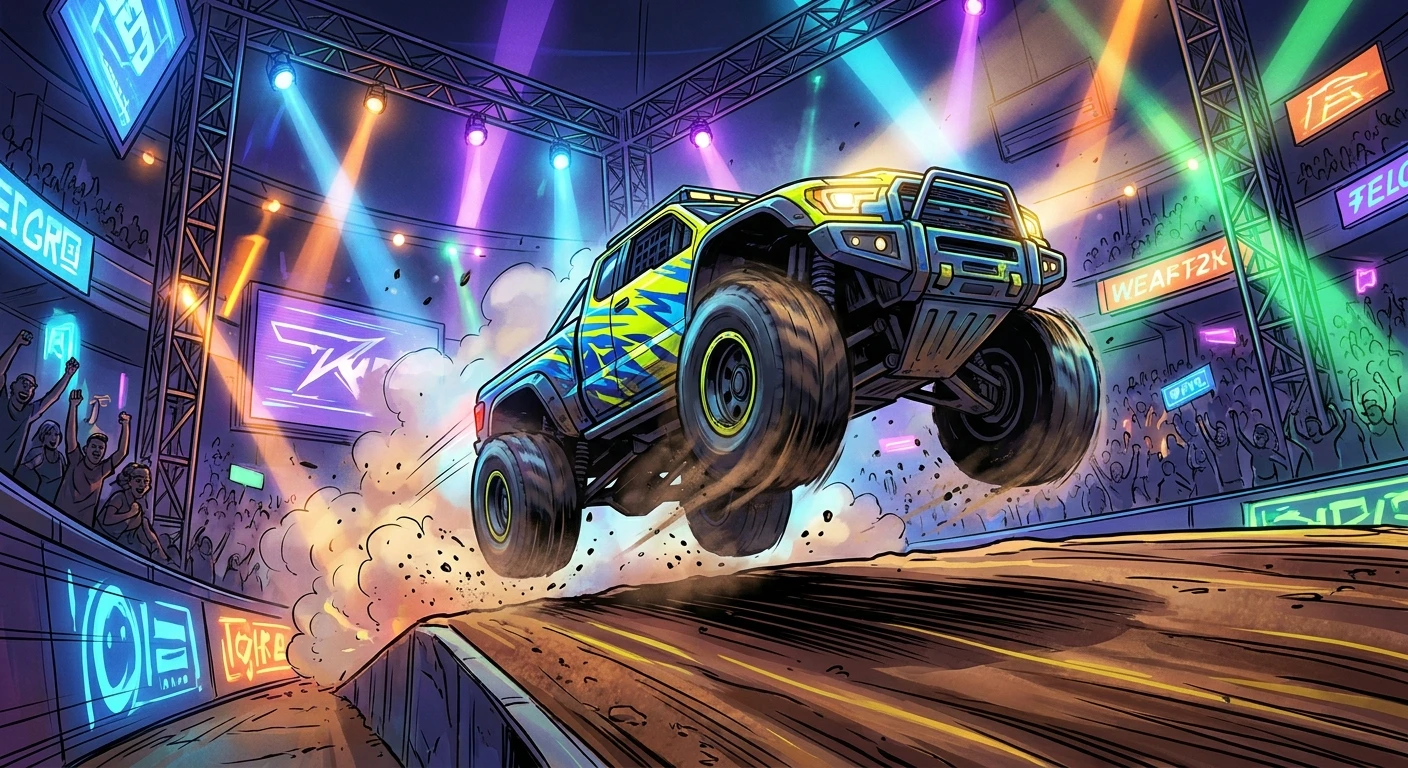
The roar of gigantic engines, the smell of racing fuel, and gravity-defying stunts make the RAM Motorsports Spectacular an unforgettable experience for arena crowds. If you have ever felt the ground shake as a five-ton mechanical beast launches into the air, you already know the unmatched thrill of indoor arena motorsports. This event brings together the absolute best in heavy-duty entertainment, combining the sheer destructive power of custom-built monster trucks with the high-flying precision of freestyle motocross. Designed as a family-friendly extravaganza, it caters to hardcore gearheads and wide-eyed children alike. Instead of watching action on a screen, fans feel the concussive waves of sound and witness the mechanical mastery right in front of them. The format usually blends head-to-head racing brackets with freestyle competitions, ensuring that the pacing remains fast, aggressive, and highly engaging. Beyond the main events, audiences are often treated to side acts like ATV racing, BMX demonstrations, or tough truck challenges, making every single minute of the show packed with adrenaline. Whether it is a driver executing a perfect backflip in a massive truck or a motocross rider performing a massive trick high above the dirt floor, the atmosphere is consistently electric, cementing its status as a premier indoor motor event.
Understanding the core appeal of these events requires looking at the sheer scale of the production. The logistical effort to transform a standard hockey or basketball arena into a dirt-filled playground for mechanical titans is monumental. Thousands of cubic yards of specialized dirt are hauled inside, carefully sculpted into ramps, jumps, and landing pads. This dirt must be precisely compacted to handle the impact of a 10,000-pound truck landing from a 30-foot jump without scattering dangerously into the stands. The value proposition for attendees is massive: you get a multisensory experience that cannot be replicated at home. Fans get to see world-class drivers pushing their custom-built machines to the absolute limits of physics.
Read also: Ultimate Guide to the world cup vancouver Experience; Overtime Hockey: Ultimate Sudden Death Guide.
| Event Highlight | Vehicle Specifications | Fan Experience Value |
|---|---|---|
| Monster Truck Freestyle | 10,000+ lbs, 1,500 horsepower | Unmatched sensory impact and visual spectacle |
| Freestyle Motocross (FMX) | Lightweight 250cc-450cc dirt bikes | High-tension aerial acrobatics and trick variations |
| Quad / ATV Racing | High-torque custom racing engines | Fast-paced, aggressive cornering and group battles |
To fully appreciate the experience, consider the major components that make up the typical show format. The structure is designed to build tension and deliver continuous entertainment:
- Interactive Pit Parties: Fans walk the track, stand next to the massive tires, and get autographs from the drivers.
- Heart-Pounding Racing Brackets: Trucks go head-to-head on a mirrored course where speed and tight cornering determine the champion.
- Jaw-Dropping Freestyle Runs: Drivers get a set time limit to perform the craziest jumps, donuts, and wheelies to win over the judges.
- Intermission Entertainment: Action-packed filler events like tough truck competitions keep the energy high while the main vehicles cool down.
Each of these elements contributes to an environment where the audience is not just passively watching, but actively participating in the energy of the arena. The drivers feed off the cheers, often pushing their equipment harder when the crowd gets louder.
Origins of Arena Motorsports
The roots of modern arena spectaculars trace back to the late 1970s and early 1980s. Originally, modifying trucks was a hobby for farmers and off-road enthusiasts who wanted to see who could build the toughest suspension or the largest tires to conquer mud bogs and local tractor pulls. Slowly, promoters realized that the crowd’s favorite part of these events was the sheer size and novelty of the oversized vehicles. When these trucks started crushing junk cars as a side act, a completely new industry was born. The transition from outdoor rural fairs to indoor sports arenas required a massive shift in promotion and safety standards, but it made the sport accessible to urban and suburban families who otherwise would never attend a mud bog.
The Evolution of Truck Technology
Early trucks were literally standard heavy-duty pickup trucks bolted onto modified military axles with oversized agricultural tires. They were incredibly heavy, rode stiffly, and could barely catch a few feet of air without severely damaging the chassis or injuring the driver. As the demand for more spectacular stunts grew, so did the need for better engineering. The shift toward custom-built tubular steel chassis in the 1990s revolutionized the sport. It allowed the trucks to shed thousands of pounds of unnecessary weight while drastically increasing driver safety and structural rigidity. The introduction of nitrogen-charged shock absorbers enabled drivers to launch their vehicles higher and farther, absorbing impacts that would have previously destroyed the truck.
The Modern State of the Spectacular
Today, events like this represent the pinnacle of heavy machinery entertainment. The show is highly choreographed, meticulously timed, and heavily focused on the spectator experience. The modern state of the sport integrates advanced telemetry, specialized track design, and strict safety regulations to ensure that the entertainment is delivered without compromising the well-being of the fans or the performers. Drivers are no longer just mechanics who decided to race; they are highly trained athletes capable of executing precise maneuvers in vehicles that are notoriously difficult to control. The inclusion of complementary extreme sports, like FMX, ensures that the modern show caters to a broad spectrum of action sports fans.
The Engineering Behind the Machines
The mechanical specifications of modern arena trucks are nothing short of engineering marvels. These vehicles are designed with a single purpose: to survive extreme kinetic impacts while delivering maximum torque to four massive tires. Power is usually generated by a supercharged, custom-built V8 engine running on methanol fuel, capable of producing upwards of 1,500 horsepower. Methanol is preferred over standard gasoline because it burns cooler, which is vital when a massive engine is being redlined constantly in a confined indoor space with limited airflow. The axles are custom-machined from military-grade steel, utilizing planetary gear reduction at the wheel hubs to handle the immense rotational force required to spin the 66-inch tires.
Physics of Freestyle Motocross
While the trucks rely on brute force and heavy-duty suspension, the FMX riders operate entirely on precision, balance, and aerodynamics. When an FMX rider approaches a metal launch ramp, they are compressing their suspension to preload the bike for maximum height. Once airborne, the gyroscopic forces generated by the spinning wheels allow the rider to stabilize, manipulate, and rotate the motorcycle in mid-air. The rider uses their own body weight to alter the center of gravity, pulling off backflips, tail whips, and seat grabs before perfectly aligning the wheels with the steep dirt landing ramp to absorb the kinetic energy.
- Nitrogen Shock Absorbers: Provide up to 30 inches of travel to cushion the landing of a five-ton truck.
- Methanol Injection: Delivers highly combustible fuel while keeping the massive supercharged engines from overheating.
- Tubular Steel Chassis: Acts as a protective roll cage while minimizing the overall weight of the vehicle.
- Gyroscopic Stabilization: The physical principle that allows FMX riders to control their airborne dirt bikes using throttle and braking inputs.
- Planetary Axles: Distribute the massive torque load at the wheel hub rather than the differential, preventing axle snapping on hard landings.
Step 1: Secure Pit Party Passes Early
The absolute best way to maximize your experience is to gain access to the pre-show pit party. This is a dedicated time before the main event where fans are allowed down onto the actual dirt track. You can stand right next to the massive tires, look under the chassis, and take photos with the drivers. These passes often sell out fast, so acquiring them alongside your main ticket purchase is essential. It provides a sense of scale that you simply cannot get from the grandstands.
Step 2: Pack Essential Ear Protection
Indoor motorsports are incredibly loud. The acoustics of a hockey or basketball arena act as an echo chamber for the roar of 1,500-horsepower, un-muffled V8 engines. Bringing high-quality ear protection is absolutely mandatory, especially for young children. Foam earplugs are sufficient for adults, but over-the-ear noise-canceling muffs are highly recommended for kids to ensure they enjoy the spectacle without sensory overload or hearing damage.
Step 3: Arrive Early for Autographs
Even with pit passes, the lines to meet the most popular drivers and riders can get long. Arriving at the arena exactly when the doors open ensures you have plenty of time to navigate the concourse, find the driver stations, and collect autographs without feeling rushed. Many drivers bring specialized merchandise, hero cards, and posters specifically for the early crowd.
Step 4: Navigate the Concessions Strategically
Arena food lines hit their peak right before the show starts and during the intermission. To avoid missing any of the high-octane action, plan your concession runs strategically. Grab your snacks and drinks right after you finish the pit party but before the opening ceremonies begin. Alternatively, designate one person to handle the food run during a less critical segment, such as track grooming.
Step 5: Master the Art of Action Photography
Capturing a massive truck in mid-air inside a dark arena is notoriously difficult due to the complex lighting and fast motion. Turn off your camera’s flash, as it will not reach the arena floor and only drains your battery. Instead, rely on a fast shutter speed and burst mode to capture the peak of a jump. Tracking the vehicle smoothly with your lens as it moves across the arena yields the best results.
Step 6: Understand the Judging Criteria
Knowing how the events are scored vastly improves your viewing experience. In freestyle competitions, judges award points based on variety, height, track utilization, and recovering from near-crashes. Understanding that a driver who uses the entire arena floor and hits different obstacles will score higher than one who just hits the same ramp repeatedly allows you to follow the competition like a pro.
Step 7: Plan the Post-Show Exit
When the final truck shuts off its engine, thousands of people will simultaneously head for the exits. To avoid the parking lot bottleneck, have a post-show plan. Either leave during the final minutes of the last freestyle run to beat the rush, or plan to stay in your seats for an extra ten minutes, letting the initial wave of traffic clear out while you review your photos and videos.
Myth: The vehicles are just modified street pickups.
Reality: The machines on the arena floor share zero components with anything you can buy at a dealership. They are purpose-built, highly engineered race vehicles constructed from custom tubular steel, featuring specialized engines and custom fiberglass bodies.
Myth: The event is only for hardcore car enthusiasts.
Reality: The entire production is meticulously structured as family entertainment. With bright colors, loud music, engaging announcers, and a fast-paced format, it is designed to captivate audiences regardless of their automotive knowledge.
Myth: Freestyle stunts are completely improvised on the spot.
Reality: While drivers react in real-time, their freestyle runs are heavily planned. They study the dirt track layout for hours beforehand, calculating angles, entry speeds, and obstacle combinations to maximize their score within the time limit.
Myth: The FMX riders use standard, off-the-shelf dirt bikes.
Reality: FMX bikes undergo extensive modifications. The suspension is re-valved to handle extreme impacts, the footpegs are sharpened for maximum grip, and the seat foam is shaved down to allow riders more room to move during mid-air acrobatics.
How long does the show typically last?
Most events run for approximately two to two-and-a-half hours, including a 15-to-20-minute intermission. This allows enough time for racing brackets, freestyle segments, and track maintenance.
Do children need to wear ear protection?
Yes, absolutely. The noise levels inside the enclosed arena can easily exceed safe decibel limits for extended periods. Over-the-ear muffs are highly recommended for all children in attendance.
Can fans interact with the drivers?
Yes, fan interaction is a massive part of the culture. Purchasing a pit party pass allows you to meet the drivers, ask questions, and get autographs before the main event begins.
What exactly is a Pit Party?
A pit party is a pre-show event held directly on the arena dirt. Fans can walk around the massive vehicles, take close-up photos, and interact with the mechanics and drivers.
Is merchandise available for purchase on-site?
Yes, there are multiple merchandise stands located throughout the arena concourse selling everything from t-shirts and hats to scale models and ear protection.
Are personal cameras allowed in the arena?
Standard point-and-shoot cameras and smartphones are almost always permitted. However, professional cameras with detachable telephoto lenses and tripods are usually prohibited without a media pass.
How are the freestyle competitions scored?
Scoring is typically handled by a panel of judges, or sometimes through fan-based smartphone voting, based on jump height, trick variety, momentum, and saving the vehicle from rolling over.
What happens if a vehicle breaks down during a run?
Mechanics have a highly limited time window to repair vehicles between rounds. If a truck breaks down during a freestyle run, the clock stops, and they receive a score based only on what they accomplished up to that point.
Experiencing the raw mechanical power and high-flying acrobatics of arena motorsports is something every family should do at least once. From the engineering brilliance of the customized machines to the sheer bravery of the drivers and riders, the entertainment value is consistently spectacular. Prepare your ear protection, secure your pit passes early, and get ready for an evening of unforgettable destruction and skill. Secure your tickets to the RAM Motorsports Spectacular today and witness the ultimate display of heavy metal adrenaline!