
Experience the Thrill of the Lapu Lapu Festival
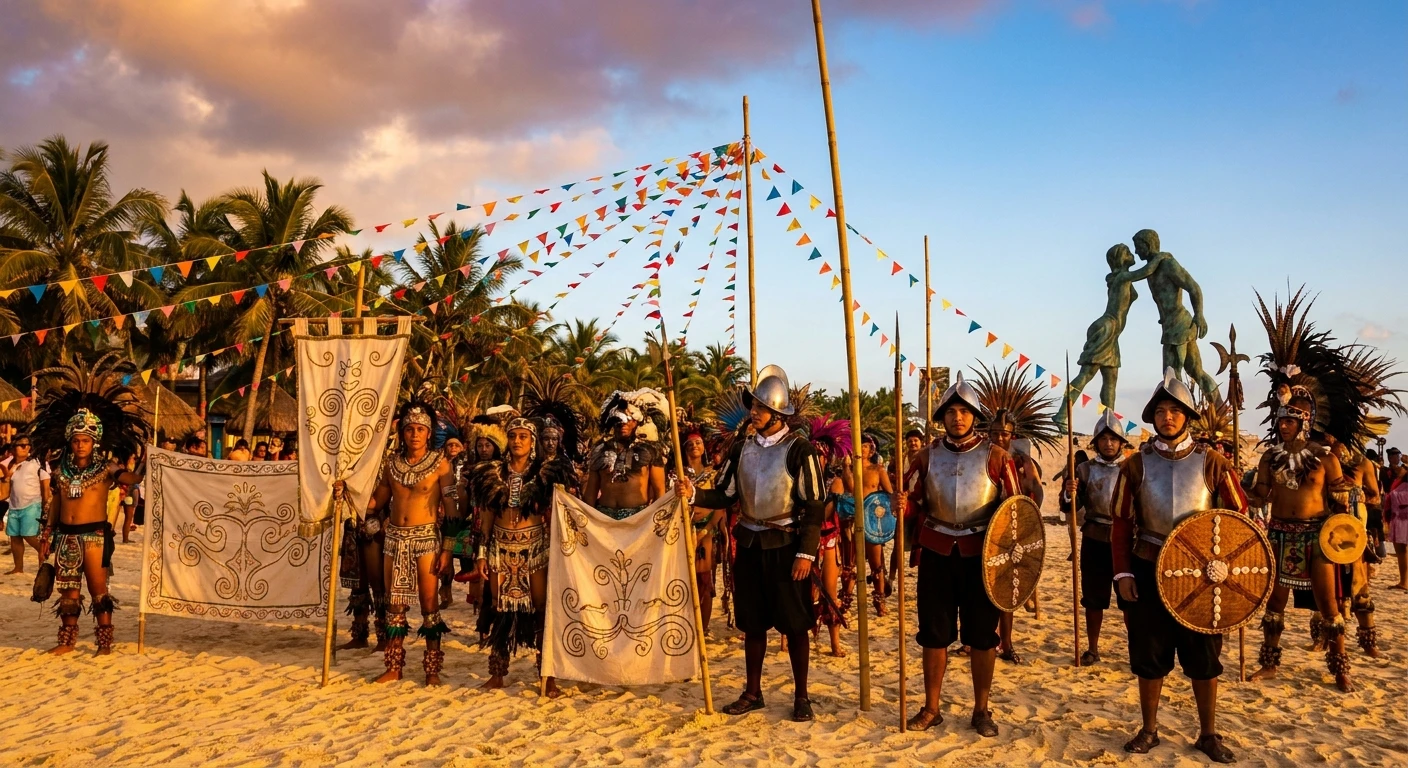
The Lapu Lapu Festival stands as one of the most vibrant and historically significant cultural celebrations in the Philippines. Rooted in the rich heritage of Mactan Island in Cebu, this massive annual gathering commemorates the legendary Battle of Mactan of April 27, 1521. For those unfamiliar with the historical weight of this date, it marks the exact moment when the indigenous chieftain, Datu Lapu-Lapu, successfully defended his homeland against Spanish forces led by Ferdinand Magellan. Far from a quiet memorial, the modern celebration transforms the coastal city into a pulsating hub of rhythm, color, and storytelling.
You find a rare blend of civic pride and theatrical grandeur here. The local government and the community pour tremendous resources into making sure the history remains alive for the younger generation. The core thesis of the event is simple: honoring indigenous resistance while celebrating the unified, vibrant culture of modern-day Cebu. Expect deafening drumbeats, dazzling street parades, intricate culinary fairs, and an infectious energy that sweeps across the entire island. Preparing for this event means understanding its mechanics, its history, and the logistical realities of navigating one of the largest regional festivals in the country.
Read also: Ultimate Guide to the world cup vancouver Experience; The Complete Guide to Ear Seeding for Wellness.
Core Elements of the Celebration
Attending this event is not a passive experience. The entire city of Lapu-Lapu shuts down major thoroughfares to accommodate the sheer volume of activities. At the heart of the celebration is the Kadaugan sa Mactan, a highly choreographed, large-scale theatrical reenactment of the 1521 battle. Local celebrities and prominent figures are often cast to play the key historical roles, drawing thousands of spectators to the sandy shores of the Liberty Shrine. The visual spectacle of wooden galleon replicas, intricate armor, and traditional tribal tattoos creates a profoundly immersive environment.
Beyond the reenactment, the festival offers an incredible value proposition for cultural enthusiasts and food lovers alike. You get direct access to authentic Cebuano heritage. Two major examples of this value include the sprawling food markets where you can taste the world-renowned Mactan lechon (roasted pig) right by the ocean, and the Rampada, a Brazilian-inspired street dancing competition that showcases local rhythmic talent. The Rampada is characterized by massive, glittering floats, synchronized choreography, and pulsating tribal house music.
| Event Highlight | Description | Primary Location |
|---|---|---|
| The Grand Reenactment | A live-action theatrical performance of the 1521 Battle of Mactan featuring local actors and elaborate period costumes. | Liberty Shrine (Mactan Shrine) |
| Rampada Street Dance | A high-energy, competitive street parade blending traditional tribal steps with modern carnival aesthetics. | Hoops Dome Area / City Roads |
| Kadaugan Food Festival | A multi-day culinary exposition showcasing native Cebuano delicacies, fresh seafood, and premium lechon. | Mactan Shrine Park |
To maximize your enjoyment and minimize travel friction, keep these three strategic priorities in mind when attending:
- Secure accommodations well in advance: Hotels and resorts on Mactan Island reach maximum capacity months before the event. Booking early ensures you stay close to the venues and avoid heavy bridge traffic from mainland Cebu.
- Adopt a heat-resilient wardrobe: April in the Philippines is the peak of the dry summer season. Wear light, breathable fabrics, apply generous amounts of sunscreen, and carry reliable hydration to safely navigate the crowded outdoor venues.
- Master the local transport network: Ride-hailing apps are available, but heavy road closures make them unreliable during parade hours. Familiarize yourself with pedestrian routes and local tricycles to maneuver around the restricted zones efficiently.
History and Origins of the Commemoration
Origins of the Memorial
The concept of honoring Datu Lapu-Lapu has existed in the oral traditions of the islanders for centuries, but formalizing it into a civic event took time. Following the Philippine independence from colonial rule, national identity required native heroes. Lapu-Lapu, as the first Asian to successfully repel European colonial expansion, became a focal point of this cultural reclamation. Early iterations of the memorial were solemn, characterized by simple floral offerings at the site where the battle is believed to have taken place. It was a day of quiet historical reflection rather than a booming tourist attraction.
Evolution into a Grand Festival
The turning point for the celebration occurred in the late 1970s and early 1980s when local tourism officials realized the narrative’s potential to unite the community and attract visitors. Initially dubbed Bahug-Bahug sa Mactan (The Melee at Mactan), the event introduced the first organized reenactments. These early performances were modest, utilizing local volunteers, makeshift costumes, and rudimentary props. However, as the island’s economy grew and the Mactan-Cebu International Airport expanded, the local government rebranded the event to Kadaugan sa Mactan (Victory of Mactan). This rebranding shifted the focus from the violence of the battle to the triumph of the indigenous spirit, paving the way for corporate sponsorships and massive infrastructural support.
The Modern State of the Celebration
Today, the Lapu Lapu Festival operates on a completely different echelon. It is a multi-million peso production that commands the attention of national media networks. The casting of the main characters—Lapu-Lapu, his wife Bulakna, and Ferdinand Magellan—is highly anticipated, often featuring top-tier film and television actors from Manila. This celebrity element has exponentially increased domestic tourism. The modern festival spans over a week, integrating environmental coastal clean-ups, sporting events like arnis (Filipino martial arts) tournaments, and international trade fairs. It has successfully evolved from a localized historical memorial into a world-class cultural carnival.
Scientific and Technical Deep Dive
Metallurgical and Tactical Realities of 1521
Understanding the reenactment requires a look at the historical and metallurgical logistics of the actual battle. The visual contrast between the Spanish conquistadors and the native warriors is striking, but the underlying science of their equipment determined the historical outcome. The Spanish forces wore armor made of European steel—cuirasses and morion helmets. While highly effective in temperate climates against blunt force, this armor became a severe thermoregulatory trap in the tropical humidity of the Philippines. Furthermore, European steel is notoriously heavy, severely limiting mobility in the coastal shallows where the battle took place.
Conversely, the native forces utilized highly advanced organic materials. Shields made from hardened rattan provided extraordinary kinetic absorption against European blades without adding excessive weight. Their primary weapon, the kampilan, was a single-edged sword featuring a distinct taper that shifted the center of gravity toward the tip. This design utilized principles of physics to maximize the centrifugal force of a swing, allowing for devastating, armor-compromising blows. The festival’s prop makers carefully replicate these center-of-mass designs to ensure the choreographic combat looks authentic.
Oceanographic and Acoustic Logistics
Executing a massive outdoor theater production on a tidal flat introduces severe environmental variables. The festival’s organizers must synchronize the reenactment schedule with precise oceanographic data. Specifically, they monitor the tidal coefficient to ensure the water level matches the historical accounts—Magellan’s galleons could not reach the shore due to low tide and coral reefs, forcing his men to wade through the water. The timing of the performance hinges entirely on this tidal reality.
- Tidal Phase Planning: Organizers use lunar charts to predict the exact minute the ebb tide will expose enough of the coral flat for the hundreds of actors to perform safely without risking deep-water drowning hazards.
- Acoustic Wind Shearing: Mactan Island experiences strong coastal breezes. Audio engineers must deploy highly directional line-array speakers to push the pre-recorded dialogue and sound effects through the wind shear without losing high-frequency fidelity.
- Thermodynamic Costume Design: Modern prop armor is constructed from high-density EVA foam and thermoplastic (Worbla). This synthetic substitution prevents the actors from suffering heat stroke under the intense 35°C (95°F) April sun, a scientific luxury Magellan’s men did not possess.
Actionable 7-Day Festival Itinerary
Day 1: Arrival and Baseline Orientation
Your first day should focus entirely on logistics. Arrive at Mactan-Cebu International Airport and head straight to your pre-booked accommodation. Use this day to map out your proximity to the main event spaces, particularly the Liberty Shrine and the Hoops Dome. Purchase local SIM cards to ensure seamless communication and download regional transportation apps. Spend your evening enjoying a quiet dinner at a local carenderia to acclimate your palate.Day 2: Historical Context and Monument Tour
Before the massive crowds form, dedicate your second day to understanding the site’s gravity. Visit the Mactan Shrine park early in the morning. Observe the bronze statue of Datu Lapu-Lapu and read the dual historical markers—one honoring the native victory and the other recognizing Magellan’s introduction of Christianity. This balanced historical foundation enriches the rest of the week’s festivities.
Day 3: The Kadaugan Food Festival
Pace yourself for a serious culinary exploration. Head to the designated food fair zones by late afternoon. The strategy here is communal dining: find a central table and assign your group to queue at different stalls. You must secure a serving of authentic Mactan lechon, known for its lemongrass and garlic-stuffed belly, alongside grilled blue marlin and the iconic hanging rice (puso) wrapped in coconut leaves.
Day 4: The Grand Reenactment
This is the climax of the trip. The reenactment usually occurs in the morning to align with historical timelines and tides. You need to arrive at the Liberty Shrine at least two hours before the start time to secure a vantage point. Bring a wide-brimmed hat, polarized sunglasses to cut the glare from the ocean, and plenty of water. The visual spectacle of the staging and the booming sound system is unparalleled.
Day 5: The Rampada Street Dancing
Transition from historical solemnity to sheer festive adrenaline. The Rampada usually dominates the major avenues near the city center. Secure a viewing spot near a designated judging area—this is where the contingents perform their most complex routines. The energy is highly infectious, featuring massive percussion lines and hundreds of dancers in brilliantly saturated costumes.
Day 6: Island Hopping and Marine Recovery
After days of navigating dense crowds, shift to ecological tourism. Rent a motorized outrigger boat (bangka) and explore the Olango Island Wildlife Sanctuary and the surrounding marine protected areas. Snorkeling in the crystal-clear waters of the Hilutungan Channel provides a tranquil contrast to the intense drumbeats of the previous days.
Day 7: Souvenir Procurement and Departure
Your final day is for securing tangible memories. Skip the generic airport shops and head to the Alegre Guitar Factory or similar local luthiers. Mactan is famous for producing world-class handcrafted acoustic guitars and ukuleles. Pick up some dried mangoes and intricate shell crafts before heading back to the airport for your outbound flight.
Myths and Realities of the Event
Myth: Datu Lapu-Lapu killed Ferdinand Magellan in a grand, cinematic one-on-one sword duel.
Reality: Historical accounts from chronicler Antonio Pigafetta reveal that Magellan was overwhelmed by a coordinated, multi-directional assault from numerous indigenous warriors, not a solitary duel with the chieftain.
Myth: The entire festival consists only of a single one-hour beach performance.
Reality: The modern celebration is a comprehensive, week-long affair that includes food fairs, martial arts tournaments, street dancing, and musical concerts across multiple city districts.
Myth: Tourists must buy expensive VIP tickets to watch the main historical reenactment.
Reality: The reenactment at the Liberty Shrine is entirely free and open to the public, though premium seating is sometimes reserved for local officials and elderly guests. Early arrival is the only currency needed for a good view.
Frequently Asked Questions
When exactly is the festival held?
The core events culminate on April 27, the historical anniversary of the battle, but peripheral events, food fairs, and parades typically begin a week prior to this date.
Where does the main reenactment take place?
The live-action battle is staged at the Liberty Shrine (often called the Mactan Shrine) in Barangay Mactan, situated directly on the coastal shallows where the historical conflict occurred.
Who portrays the historical figures?
The local government usually invites highly recognizable celebrities from the Philippine entertainment industry to play Lapu-Lapu, his wife Reyna Bulakna, and Ferdinand Magellan, adding significant media draw to the event.
Is it safe for international tourists?
Yes. The local government deploys heavy security, including local police and medical teams, to manage the crowds. However, standard travel precautions against pickpocketing in dense areas are highly advised.
What should I wear to the events?
Comfort and heat management are your top priorities. Wear breathable, light-colored cotton or athletic wear, comfortable walking shoes, and adequate sun protection. Avoid heavy fabrics.
Can I participate in the Rampada dances?
The competitive street dancing is strictly for registered, rehearsed contingents. However, spontaneous dancing on the sidelines and during the evening street parties is highly encouraged and welcomed.
Are drones allowed during the reenactment?
Drone regulations are strictly enforced due to the proximity of the Mactan-Cebu International Airport and crowd safety. Always secure official permits from the local tourism office and aviation authority before launching any aerial equipment.
Immersing yourself in the Lapu Lapu Festival offers a profound connection to the resilient heart of Cebuano culture. It is an extraordinary testament to how a community honors its past while sprinting toward a vibrant future. If you are ready to witness the spectacular intersection of history, art, and tropical energy, start locking in your flights and accommodations for next April today!