
Understanding the Role of Springhill Institution in the Canadian Justice System
Analyzing the complexities of federal corrections brings us directly to Springhill Institution, a pivotal medium-security facility located in the province of Nova Scotia, Canada. Operating under the jurisdiction of the Correctional Service of Canada (CSC), this specific establishment serves a critical function in housing, managing, and rehabilitating male offenders who require a moderate level of supervision. Situated strategically in the community of Springhill, the facility balances the dual mandates of ensuring public safety and providing comprehensive rehabilitative opportunities for its inmate population. By maintaining secure perimeters while simultaneously offering structured internal environments, the institution bridges the gap between maximum-security containment and minimum-security community transition.
The operational philosophy governing this location rests heavily on evidence-based correctional practices. Rather than relying solely on punitive measures, the systemic approach emphasizes the gradual reintegration of individuals into society as law-abiding citizens. To achieve this, the administration deploys a vast array of specialized programs targeting the root causes of criminal behavior, ranging from substance abuse to a lack of vocational training. Staff members, including correctional officers, parole officers, psychologists, and healthcare professionals, work collaboratively to assess risk and formulate individualized correctional plans. Through these coordinated efforts, the facility plays an essential part in the broader justice framework of the Atlantic region, ensuring that offenders receive the supervision and support required to mitigate future risks to the public.
Read also: Thompson General Hospital Care Guide; Emergency Towing Service Guide: Fast Roadside Assistance.
Core Functions, Rehabilitation, and Daily Operations
The daily functionality of a medium-security environment requires a meticulously structured schedule that dictates the movement, activities, and responsibilities of the inmate population. Operations are designed to maximize constructive use of time while minimizing idle periods that could lead to institutional instability. Inmates are expected to participate actively in their correctional plans, which often mandate involvement in specific educational or therapeutic programs. The environment is heavily regulated, yet it provides individuals with the necessary autonomy to demonstrate responsibility, a key metric used in assessing readiness for eventual release or transfer to lower-security environments.
Rehabilitation constitutes the core objective of the internal programming. The facility provides a robust catalog of interventions tailored to address specific criminogenic needs. Table 1 below outlines the primary categories of programs available, their primary objectives, and specific examples of implementation.
| Program Category | Primary Objective | Specific Example |
|---|---|---|
| Educational Services | Elevate literacy and provide secondary school equivalency. | Adult Basic Education (ABE) and GED preparation classes. |
| Vocational Training | Equip individuals with marketable, certified job skills. | CORCAN manufacturing, construction, and textiles workshops. |
| Therapeutic Interventions | Address addiction, anger management, and cognitive behavioral deficits. | National Substance Abuse Program and Integrated Correctional Program Model. |
To sustain these operations, the administration relies on several foundational pillars of facility management. These components ensure that the environment remains stable and conducive to learning.
- Dynamic Security Protocols: Staff members actively interact with the inmate population, gathering intelligence, building professional relationships, and identifying potential conflicts before they escalate into violence.
- Structured Population Management: Inmates are housed in specific units based on compatibility, risk levels, and program participation, preventing gang-related affiliations from disrupting the facility’s operations.
- Comprehensive Health and Wellness Services: The institution provides continuous access to medical, dental, and psychological care, ensuring that physical and mental health issues do not impede an offender’s rehabilitative progress.
Through these mechanisms, the daily operations consistently reinforce the overarching goal of risk management and behavioral modification.
The Historical Timeline of the Facility
Origins and Planning
The conceptualization of Springhill Institution dates back to the mid-20th century, a period characterized by significant shifts in Canadian penal philosophy. During the late 1950s and early 1960s, the federal government recognized an urgent need to modernize its correctional infrastructure, particularly in the Atlantic region. Older facilities, such as Dorchester Penitentiary, were struggling with issues of overcrowding and outdated architectural designs that hindered effective rehabilitation. The decision to construct a new medium-security facility in the town of Springhill was driven by the availability of land, regional economic considerations, and the strategic need to distribute the offender population more evenly across the maritime provinces. The planning phases prioritized a campus-style layout, which was considered highly progressive at the time, allowing for better separation of inmate cohorts and safer movement across the grounds.
Evolution of Security Protocols
Upon opening its doors in the late 1960s, the facility operated under the security standards of that era, which relied heavily on physical barriers and manual surveillance. However, as the decades progressed into the 1980s and 1990s, the Correctional Service of Canada introduced wide-ranging policy reforms. The facility adapted by implementing rigorous classification systems, ensuring that only inmates meeting the specific criteria for medium security were housed there. This era also saw the introduction of computerized record-keeping, enhanced perimeter lighting, and the early stages of electronic surveillance integration. The evolution of security at the site mirrored broader national trends, shifting away from purely static security measures toward a model that heavily incorporated staff-inmate interaction and behavioral observation.
Modern State and Recent Upgrades
In the contemporary era, the institution stands as a highly modernized correctional facility. The early 2000s and subsequent years brought substantial infrastructural investments aimed at upgrading the physical plant to meet 21st-century standards. Innovations included the installation of advanced Perimeter Intrusion Detection Systems (PIDS), high-definition digital camera networks, and modernized living units designed to reduce institutional violence. The modern state of the facility also reflects a profound shift in healthcare delivery, with upgraded medical wings capable of providing sophisticated psychological and physiological care. Today, the location operates not just as a center for confinement, but as a heavily monitored, data-driven environment focused on measurable rehabilitative outcomes.
Architectural and Security Technicalities
Perimeter and Environmental Design
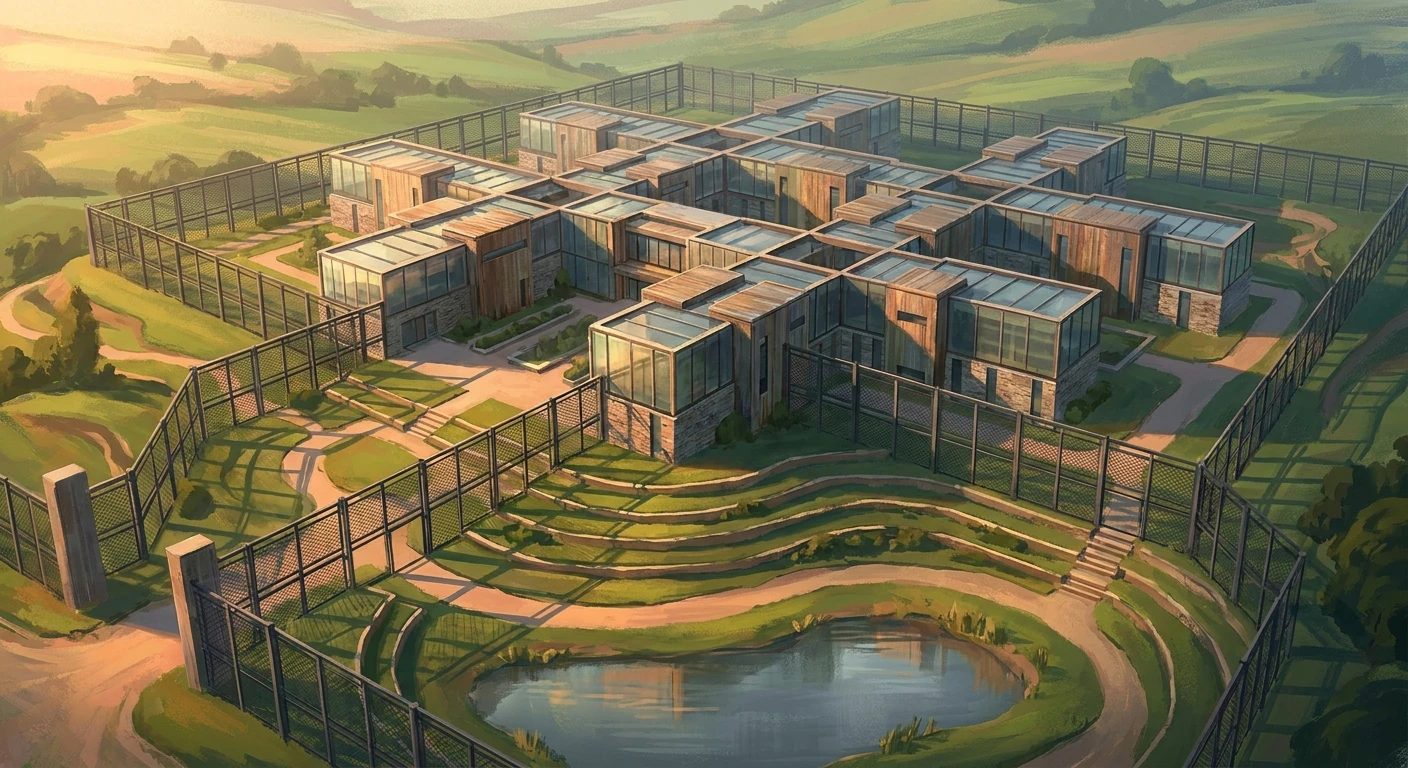
The architectural layout of a medium-security prison is fundamentally different from both maximum and minimum-security environments. The perimeter relies on a formidable array of physical and electronic deterrents. The boundary is typically defined by parallel rows of high chain-link fencing, topped with razor wire. Between these fences lies a strictly controlled zone monitored by the Perimeter Intrusion Detection System. This system utilizes a combination of microwave sensors, geophone vibration detectors buried in the ground, and infrared cameras to detect any unauthorized movement or attempts to breach the boundary. The environmental design within the perimeter utilizes a campus model. Unlike the massive, single-block structures of older penitentiaries, the living units, administrative buildings, and program areas are separated by open outdoor spaces. This forces inmates to move across the compound under direct observation, facilitating better crowd control and reducing the likelihood of large-scale disturbances.
Inmate Classification and Surveillance Systems
Internal security relies heavily on the continuous assessment of risk. The facility utilizes advanced classification algorithms and surveillance protocols to monitor the population.
- Custody Rating Scale (CRS): A scientifically validated actuarial tool used to assess an offender’s institutional adjustment, escape risk, and threat to public safety, determining their suitability for the medium-security environment.
- Unit-Based Supervision: Housing modules are constructed to allow correctional officers unobstructed sightlines into common areas, applying the principles of Crime Prevention Through Environmental Design (CPTED).
- Static Security Elements: The use of biometric scanners, specialized locking mechanisms, and controlled access points that segment the facility into isolated zones to contain potential incidents rapidly.
- Intelligence Gathering Networks: Dedicated preventive security officers analyze communications, financial transactions, and behavioral patterns to dismantle illicit networks within the walls.
These technical systems work in tandem with the human element to create a highly regulated ecosystem where every variable is closely monitored and managed.
The Offender Integration and Intake Pathway
When an individual is assigned to this specific location, they do not simply walk into the general population. Instead, they undergo a highly structured, multi-phase intake and integration process designed to assess their needs and mitigate any immediate risks. This systematic pathway dictates their entire trajectory through the federal correctional system.
Step 1: Initial Reception and Security Screening
Upon arrival, the individual is immediately subjected to rigorous security protocols. This includes comprehensive searches of their person and belongings to prevent the introduction of contraband. Identification is verified via biometric data, and initial housing assignments are made in a temporary reception unit where the offender is isolated from the general population until further clearances are obtained.
Step 2: Comprehensive Medical and Psychological Assessment
Within the first 24 to 48 hours, healthcare professionals conduct a thorough physical and mental health baseline assessment. This step identifies acute medical needs, chronic conditions, communicable diseases, and immediate psychological risks, such as self-harm tendencies, ensuring that appropriate care protocols are activated immediately.
Step 3: Application of the Custody Rating Scale
Case management teams review the offender’s criminal history, judicial sentencing remarks, and behavioral records. They apply the Custody Rating Scale to confirm that the individual’s risk profile aligns with the facility’s medium-security parameters, adjusting their internal supervision requirements accordingly.
Step 4: Development of the Correctional Plan
Parole officers work with the offender to draft a formal Correctional Plan. This legally binding document outlines the specific criminogenic needs the inmate must address—such as substance abuse or anger management—and sets clear expectations for their behavior and program participation during their sentence.
Step 5: Enrollment in Core Rehabilitative Programs
Based on the Correctional Plan, the individual is enrolled in targeted therapeutic interventions. These evidence-based programs are facilitated by trained behavioral specialists and require the offender to actively engage in cognitive restructuring to alter their criminal thought patterns.
Step 6: Vocational Training and CORCAN Participation
To prepare for eventual economic independence, inmates are assigned to work details or vocational training programs. Through initiatives like CORCAN, they acquire verifiable, certified skills in trades such as carpentry, metalwork, or industrial cleaning, drastically improving their employability post-release.
Step 7: Pre-Release Planning and Community Transition
As the individual approaches their statutory release date or parole eligibility, the focus shifts toward community reintegration. Case managers coordinate with community parole officers, halfway houses, and local law enforcement to ensure a structured, supervised, and safe transition back into society.
Common Misconceptions
Public understanding of federal corrections is frequently distorted by cinematic portrayals and media sensationalism. Clarifying the reality of these environments is essential for a factual comprehension of the justice system.
Myth: Medium security means inmates have free reign of the property.
Reality: Movement is heavily restricted and scheduled. Inmates must have authorized passes to move between buildings, and all movement is monitored by staff and camera systems.
Myth: Facilities like this serve purely to punish offenders.
Reality: While the deprivation of liberty is the punishment, the daily operations are overwhelmingly focused on rehabilitation, education, and risk reduction to ensure public safety upon release.
Myth: Security relies exclusively on physical barriers like walls and fences.
Reality: The most effective security measure is dynamic security, which involves the professional, continuous interaction between correctional staff and inmates to resolve issues before they escalate.
Myth: Vocational programs inside are just busywork to pass the time.
Reality: Programs like CORCAN operate to industry standards, providing inmates with actual apprenticeships and certifications recognized by external employers.
Frequently Asked Questions
Where is Springhill Institution located?
The facility is located in the community of Springhill, in the province of Nova Scotia, Canada.
What is the security level of the facility?
It operates strictly as a medium-security federal correctional facility.
Who operates the facility?
The location is operated and managed by the Correctional Service of Canada (CSC), a federal government agency.
What gender of offenders does it house?
The institution is designated for the housing and rehabilitation of male offenders.
Can inmates work while incarcerated there?
Yes, inmates have access to various employment opportunities and vocational training programs, notably through the CORCAN initiative.
Are there healthcare services on-site?
The site features a fully operational health care center providing medical, dental, and psychological services to the inmate population.
How does the facility handle visitation?
Visitation is permitted but strictly regulated. Visitors must undergo a background check and rigorous security screening before being granted access to the designated visiting areas.
Does the facility offer educational upgrading?
Yes, the education department provides adult basic education, secondary school equivalency preparation, and various literacy programs.
In closing, Springhill Institution remains a highly complex, meticulously regulated environment dedicated to the dual mandates of secure containment and active rehabilitation. Through its structured programs, advanced security technology, and dedicated staff, it plays an indispensable role in maintaining public safety. For specific visiting hours, family resources, or official policy documents, please consult the official web portals of the Correctional Service of Canada.