Experiencing the Surrey Nagar Kirtan: A Complete Guide
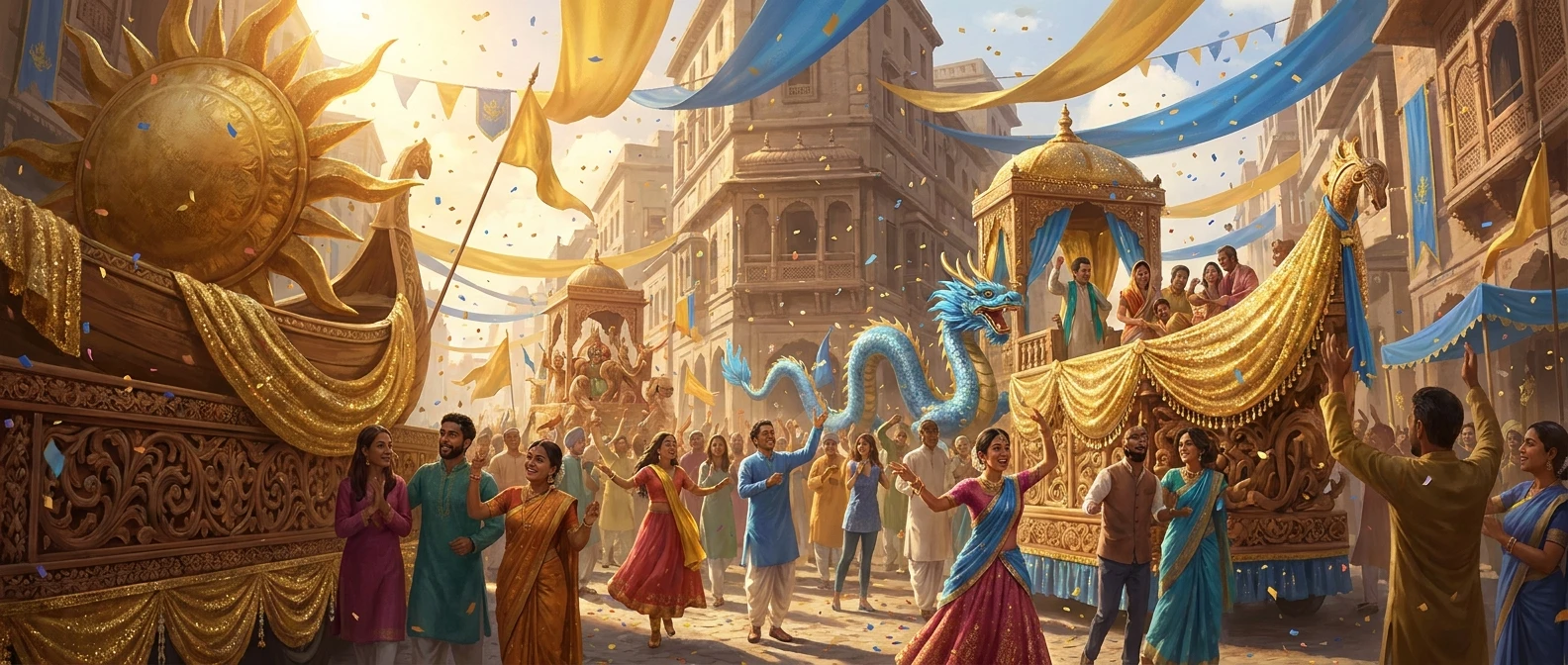
The Surrey Nagar Kirtan stands as one of the most spectacular and spiritually significant community events held anywhere outside of South Asia, drawing hundreds of thousands of attendees year after year to British Columbia. For those unfamiliar with the terminology, the phrase translates directly from Punjabi, with ‘Nagar’ meaning town or neighborhood, and ‘Kirtan’ referring to the singing of divine hymns. When these elements combine, they form a massive, joyous spiritual procession that brings the teachings of Sikhism out of the Gurdwara and directly into the streets. This colossal gathering typically coincides with the celebration of Vaisakhi in April, marking the birth of the Khalsa panth. Walking through the streets during this monumental occasion provides a masterclass in community harmony, boundless generosity, and deep cultural pride. You will witness a phenomenal display of faith where the entire city seems to pause, coming together to share food, music, and mutual respect. The sheer scale of the celebration requires meticulous municipal coordination, making it a modern marvel of civic engagement. By examining the history, logistics, and spiritual core of this gathering, anyone can fully appreciate the immense value it brings to the broader community.
Core Benefits and Community Impact
Understanding the true value of this massive gathering requires looking beyond the bright colors and festive atmosphere to see the profound social and spiritual mechanisms at work. The event operates on the foundational Sikh principle of Sarbat Da Bhala, which translates to wishing well for all of humanity. This is not merely a philosophical concept; it is actively practiced through every element of the procession. The most visible manifestation of this is the Langar, the free community kitchen where thousands of volunteers distribute massive quantities of freshly prepared food to absolutely anyone who asks, regardless of their background, beliefs, or financial status. This radical equality breaks down social barriers and fosters a profound sense of unity. Furthermore, the event serves as a massive educational platform, allowing the broader public to interact with and understand Sikh traditions, thereby reducing prejudice and building cross-cultural bridges. Economically, the influx of visitors provides a substantial boost to local businesses, hotels, and public transit systems.
Read also: The Complete Guide to the HSN 50/50 Draw Mechanics; Explore Kashechewan First Nation Today.
| Core Feature | Detailed Description | Direct Community Impact |
|---|---|---|
| The Palki Sahib | The main float carrying the Guru Granth Sahib, the eternal Guru and holy scripture of the Sikhs. It leads the entire procession. | Provides a central spiritual focus, allowing attendees to pay respects and experience traditional devotional music in a communal setting. |
| Mass Langar Distribution | Hundreds of stalls set up by families, local businesses, and community groups serving entirely free meals, snacks, and beverages. | Eliminates hunger for the day, demonstrates radical equality, and provides a hands-on opportunity for selfless service (Seva). |
| Gatka Demonstrations | Highly disciplined displays of traditional Sikh martial arts, featuring intricate sword work and physical agility by trained practitioners. | Preserves ancient cultural heritage, instills discipline in the youth, and offers thrilling, culturally educational entertainment for spectators. |
The entire operation rests upon a foundation of shared values that extend far beyond the single day of celebration. These principles resonate with universal human ideals, making the event highly impactful for everyone involved.
- Absolute Inclusivity and Equality: The structural design of the procession and the free kitchen ensures that no one is treated differently based on their socioeconomic status, race, or religion. Everyone sits together, eats together, and walks together on the same ground.
- The Practice of Nishkam Seva: This refers to selfless service performed without any expectation of reward. Months before the event, thousands of volunteers begin organizing, cooking, and cleaning, viewing this hard work as a direct form of spiritual devotion.
- Cultural Preservation and Youth Engagement: The gathering serves as a dynamic, living classroom for younger generations. By actively participating in hymn singing, martial arts, and food preparation, the youth internalize their heritage in a way that textbooks simply cannot replicate.
- Civic Unity and Multicultural Celebration: As a major Canadian metropolitan center, the city utilizes this gathering to showcase its successful multicultural framework, proving that diverse communities can not only coexist but actively celebrate each other’s foundational traditions.
Origins and Historical Evolution
Roots of the Vaisakhi Tradition
To fully grasp the magnitude of this gathering, one must look back to the Punjab region of South Asia in the year 1699. It was during the harvest festival of Vaisakhi that the tenth Sikh Guru, Guru Gobind Singh Ji, established the Khalsa. This was a pivotal moment in history, transforming the Sikh community into a dedicated order of saint-soldiers committed to upholding justice, equality, and righteousness. The Khalsa was created to abolish the caste system, granting all men the surname Singh (Lion) and all women the surname Kaur (Princess). The tradition of taking the holy scripture through the streets to bless the community began as a way to ensure that even those unable to visit the Gurdwara could hear the divine hymns. This historical mandate of visibility, courage, and community service forms the unbreakable backbone of every modern procession.
Evolution in British Columbia
The journey from the fields of Punjab to the streets of British Columbia is a testament to the resilience of early South Asian immigrants. Sikhs began arriving in Canada in the late 19th and early 20th centuries, facing severe hardships, discrimination, and harsh legislative barriers. Despite these immense challenges, they established the first North American Gurdwaras as safe havens and community hubs. For decades, Vaisakhi was celebrated modestly within the confines of these early temples. However, as the community grew in size, political influence, and economic strength, the desire to share their rich heritage with their new homeland blossomed. By the late 1990s, the community in the Lower Mainland decided to bring the celebration outward, launching the first officially permitted street processions. What started as a modest walk around a few city blocks slowly gained momentum, attracting neighbors, local politicians, and curious onlookers.
The Modern State of the Surrey Celebration
Today, the gathering has transformed into an internationally recognized phenomenon. Surpassing almost all other comparable events globally, it routinely draws upwards of half a million people to the city streets every April. The Gurdwara Dashmesh Darbar serves as the organizing epicenter for this massive undertaking. In recent years, including the highly successful editions leading up to 2026, the procession has integrated modern technology, live broadcasting, and high-level civic partnerships to manage the staggering crowds. It is no longer just a local religious observance; it is a premier cultural hallmark of the Pacific Northwest. City officials, law enforcement agencies, and provincial leaders actively participate, recognizing the gathering as a cornerstone of the regional cultural calendar. The modern iteration perfectly balances ancient spiritual reverence with contemporary logistical execution.
Technical and Logistical Deep Dive
Navigating the Parade Infrastructure
Hosting half a million people in a suburban environment is a staggering feat of civic engineering and logistical planning. The infrastructure required mirrors that of a major international sporting event. Months of coordination occur between the Gurdwara committee, the Royal Canadian Mounted Police (RCMP), local fire departments, and the municipal engineering office. A comprehensive traffic management plan is executed, establishing massive perimeter cordons, designated emergency vehicle access lanes, and synchronized road closures. The engineering department must also secure heavy-duty barricades and reroute major public transit lines to prevent gridlock. Furthermore, the city sets up highly visible mobile command centers where emergency personnel monitor crowd density and weather conditions in real-time, ensuring public safety remains the absolute priority throughout the day.
The Mechanics of Langar Preparation
The scientific and logistical reality of feeding over 500,000 people for free in a single day is mind-boggling. This is not a catered event; it is a decentralized, volunteer-driven massive supply chain operation. The procurement of raw ingredients begins weeks in advance. Wholesalers deliver literal tons of flour, lentils, onions, potatoes, and sugar. Food safety becomes a highly technical endeavor. Health inspectors work closely with families and businesses setting up the temporary outdoor kitchens to ensure proper temperatures are maintained for massive cauldrons of curries and deep-fried treats like samosas and jalebis. Waste management is another critical technical aspect. Environmental task forces deploy thousands of recycling receptacles and coordinate fleets of cleanup crews to ensure the streets are left immaculate by sunset.
- Over 500,000 estimated attendees navigating a meticulously planned and secured route spanning several kilometers.
- Thousands of kilograms of raw agricultural commodities processed into fresh meals within a 24-hour window.
- Hundreds of individual, family-funded food distribution stations operating under stringent municipal health and safety guidelines.
- A massive zero-waste initiative involving dedicated eco-volunteers, sorting compostable food waste and recyclable beverage containers.
- Integrated mobile command operations utilizing aerial drones and specialized communications grids managed by local law enforcement.
Actionable 7-Step Plan for Attendees
Step 1: Researching the Official Route
Preparation is the key to an enjoyable experience. Days before the event, secure a map of the official route, which is typically published by the Gurdwara Dashmesh Darbar and the local municipality. The procession moves slowly, usually starting around 9:00 AM and concluding by 4:00 PM. Identifying the specific streets that will be closed will help you pinpoint the best entry points. Decide whether you want to witness the spectacular beginning as the Guru Granth Sahib leaves the Gurdwara, or if you prefer to find a comfortable spot along the mid-point of the route to watch the floats go by.
Step 2: Planning Transportation and Parking
Attempting to drive directly to the epicenter of the gathering is a logistical nightmare. The most actionable advice is to utilize public transit. Park your vehicle at a distant SkyTrain station or designated park-and-ride lot, and take the bus networks that provide specialized detours near the event perimeter. If you must drive, plan to park several kilometers away in legally permitted residential zones and prepare for a substantial, albeit scenic, walk to the main thoroughfares. Arrive very early in the morning to secure any viable parking spots.
Step 3: Dressing Appropriately and Respectfully
Because this is fundamentally a religious procession, dressing modestly is highly recommended. You will be walking for several hours, so comfortable, supportive footwear is non-negotiable. More importantly, to fully participate and enter the Gurdwara or approach the main float, you must cover your head. While bandanas or simple scarves are perfectly acceptable, it is wise to bring your own head covering from home, though many volunteers hand them out at the event edges. Furthermore, avoid bringing or consuming any alcohol, tobacco, or intoxicating substances, as these are strictly prohibited in the presence of the Guru Granth Sahib.
Step 4: Experiencing the Main Gurdwara Sahib
Before stepping into the street festivities, make an effort to visit the Gurdwara itself. Upon entering, you will need to remove your shoes, wash your hands, and cover your head. Walk respectfully into the main prayer hall (Darbar Sahib) and observe the peaceful, meditative singing of Kirtan. You may choose to sit cross-legged on the carpeted floor for a few moments to absorb the tranquil atmosphere. This vital step grounds the entire day, providing essential spiritual context for the massive street celebration occurring outside the temple doors.
Step 5: Engaging with Langar Offerings
As you walk the route, you will be enthusiastically approached by families urging you to take their food. Accept these offerings graciously. The actionable advice here is to pace yourself. You will encounter everything from spicy chole bhature and fresh pakoras to sweet chai and ice cream. Try small portions from various stalls rather than filling up at the first tent you see. Remember to express your gratitude to the volunteers. Discard your plates and cups responsibly in the specifically designated bins to support the massive cleanup effort.
Step 6: Following the Main Float (Palki Sahib)
To experience the true heart of the procession, locate the Palki Sahib, the heavily decorated main float carrying the holy scripture. You will hear it before you see it, as it is accompanied by powerful loudspeakers broadcasting live devotional singing. Approach the area with reverence. Many attendees choose to walk barefoot directly behind or beside this float as a sign of deep respect. Observing the dedication of the sewadars (volunteers) who sweep the street immediately ahead of the float is a profoundly moving experience.
Step 7: Participating in Community Seva
The ultimate way to engage with the gathering is not just to consume, but to contribute. You do not need to be an official organizer to practice Seva. Bring a pair of gloves and a garbage bag and spend an hour picking up stray litter along the route. Offer to help a family break down their food tent as the afternoon winds down. Assist elderly attendees in navigating the dense crowds. By shifting your mindset from a passive spectator to an active participant, you will unlock the deepest, most rewarding aspect of the entire day.
Myths and Reality
Myth: The gathering is an exclusive religious event solely for baptized Sikhs.
Reality: It is a radically inclusive public celebration where people of absolutely all faiths, ethnicities, and backgrounds are warmly welcomed and treated as equals by the organizers and attendees alike.
Myth: You need to bring plenty of cash to buy food from the street vendors.
Reality: There are no vendors selling food. Every single item of food and beverage provided along the route is completely free, funded by the community through the tradition of Langar.
Myth: The massive crowds cause unmanageable civic chaos and danger.
Reality: The event is one of the most peaceful large-scale gatherings in the world, backed by months of sophisticated municipal planning, extensive police coordination, and thousands of disciplined volunteers ensuring absolute safety.
Myth: It is just a cultural street festival or a typical municipal parade.
Reality: While it has festive elements, it is fundamentally a deeply spiritual procession led by the Sikh holy scripture, accompanied by continuous prayer and traditional hymn singing.
Frequently Asked Questions
What is the Surrey Nagar Kirtan?
It is a massive Sikh spiritual procession and community gathering that takes place in the streets of British Columbia, celebrating the harvest festival of Vaisakhi and the historic birth of the Khalsa.
When does the parade usually take place?
The event typically occurs on a Saturday in the middle of April every year, aligning closely with the historical date of Vaisakhi.
Where does the official route begin and end?
The procession traditionally starts at the Gurdwara Dashmesh Darbar, winds its way through several kilometers of surrounding residential and commercial streets, and ultimately returns to the same Gurdwara in the late afternoon.
Is there an admission fee to attend?
Absolutely not. The entire event is completely free and open to the general public, with no tickets, entry fees, or hidden costs required to participate or eat.
Are there accessible viewing areas available?
Yes, organizers and city planners ensure that the paved route remains accessible for wheelchairs and strollers, and certain designated areas are kept clear for those with mobility challenges.
What should I do if I get separated from my group?
Due to the massive crowds, cellular networks can sometimes become congested. It is highly recommended to establish a physical meeting point, such as a specific intersection or a prominent local landmark, before entering the main event zone.
How is the massive amount of waste handled?
The community takes immense pride in leaving the city spotless. Thousands of volunteers coordinate with municipal sanitation services to separate recycling, compost, and trash, often cleaning the streets entirely before the sun sets.
A Final Word on the Celebration
Experiencing the Surrey Nagar Kirtan is an unforgettable journey into the heart of community generosity, spiritual devotion, and civic unity. It transcends cultural boundaries, offering every attendee a profound lesson in equality and selfless service. Whether you are drawn by the rich history, the stunning visual displays, or the incredible free food, the gathering promises a profoundly uplifting experience. Mark your calendar for the next April celebration, gather your friends and family, and step into the streets to witness this magnificent testament to human harmony. Plan your visit today and become part of a tradition that continues to make the world a brighter, more connected place.