
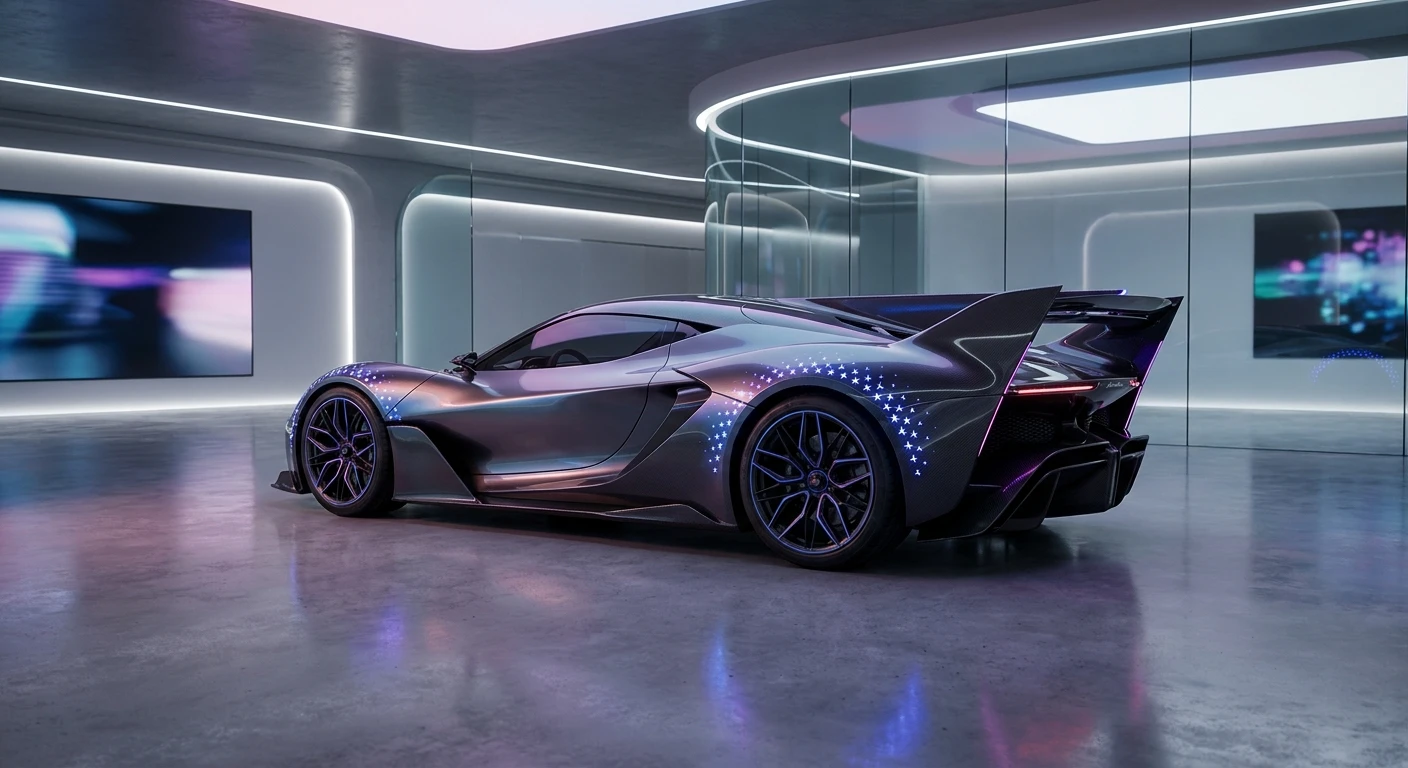
Understanding the Apollo EVO Price and Hypercar Exclusivity
Hey, let’s talk about the hypercar market. If you are tracking the elite tiers of the automotive world, the Apollo EVO price is likely on your radar. You see, evaluating a machine like this is not like pricing a standard luxury sedan. When you look at the automotive landscape right now, ultra-exclusive hypercars are operating in a financial stratosphere entirely of their own. The Apollo EVO is the striking, alien-like successor to the legendary Intensa Emozione, and it carries a financial valuation that reflects its extreme rarity and bespoke engineering.
We are dealing with an asset class where multi-million-dollar tags are simply the entry fee. The true cost of the Apollo EVO represents years of intense research, development, and a refusal to compromise on raw emotional driving experiences. It is a vehicle designed for a tiny fraction of automotive enthusiasts who demand naturally aspirated power, dramatic aerodynamics, and craftsmanship that rivals high-end aerospace manufacturing. This is not just a car; it is a rolling piece of avant-garde art. Understanding why the Apollo EVO price sits where it does requires us to look past the badge and analyze the carbon fiber, the engine mechanics, and the hyper-exclusive ownership experience that accompanies the keys.
Read also: Understanding the KTM X Bow GT XR Price and Specs; The Aston Martin Valhalla Price Guide.
Why the Apollo EVO Commands Such a High Valuation
To really grasp the financial mechanics behind this hypercar, you have to break down what exactly you get for your money. The value proposition of the Apollo EVO is built on three massive pillars: unmatched exclusivity, uncompromising analog engineering, and investment-grade appreciation potential.
First, let’s look at a core breakdown of the engineering areas driving the cost:
| Component Area | Primary Cost Driver | Owner Benefit |
|---|---|---|
| Chassis and Safety Structure | Bespoke Carbon Fiber Monocoque | LMP2-level structural rigidity for ultimate track safety and immediate dynamic response. |
| Powertrain and Exhaust | Naturally Aspirated V12 Engineering | A visceral, high-revving emotional sound with incredibly linear power delivery. |
| Aerodynamic Architecture | Active Aero and Complex Fin Geometry | Massive high-speed downforce, cornering stability, and an unparalleled visual street presence. |
When you evaluate the value proposition, the examples are clear. First, consider the investment angle. Hypercars produced in strictly limited numbers, like the EVO, often appreciate in value on the private market because demand among billionaires far exceeds the supply. Second, consider the experiential value. Owners are not just buying a fast car; they are buying entry into elite factory-supported track days and exclusive global hypercar events.
Here is a breakdown of the primary factors inflating the sticker price:
- Carbon Fiber Mastery: The entire tub and body panels require specialized autoclaves and hundreds of hours of manual layup to ensure zero imperfections.
- Bespoke Powertrain Sourcing: Developing and tuning a naturally aspirated V12 to pass modern safety and performance metrics requires a massive financial outlay.
- Aerodynamic Testing: The star-shaped daytime running lights and aggressive rear fins are not just for show; they undergo countless hours of expensive computational fluid dynamics and wind tunnel testing.
The Origins of Apollo Automobil
To understand the current brand positioning, you have to look at its roots. The story started with Roland Gumpert and the original Gumpert Apollo, a car that famously prioritized raw lap times and function over pure aesthetics. It set records at the Nurburgring and proved that a small boutique manufacturer could challenge the established giants. However, corporate restructuring eventually led to a buyout by Ideal Team Venture. This new ownership rebranded the company as Apollo Automobil, shifting the philosophy from purely function-driven track monsters to highly emotional, beautifully sculpted works of automotive art. The price tags shifted accordingly, matching the newfound premium positioning.
Evolution from the Intensa Emozione
The immediate predecessor to the EVO was the Apollo IE (Intensa Emozione). The IE shocked the world with its radical bat-like styling and a screaming 6.3-liter V12. Capped at exactly ten units worldwide, the IE was priced at roughly $2.7 million upon release. That aggressive pricing strategy proved highly successful, as all build slots sold out instantly. The IE proved that buyers were hungry for cars that rejected hybrid complexity in favor of old-school combustion drama. The Apollo EVO price builds directly upon this foundation, taking everything that made the IE successful—the dramatic styling, the bespoke nature, the raw engine—and pushing it to the next technological limit.
The Modern State of Hypercar Pricing
If you look at the broader market, inflation and the rapid shift toward electric vehicles are drastically affecting hypercar economics. As major manufacturers abandon V12 engines for silent EV powertrains, the remaining analog, purely combustion-driven hypercars are skyrocketing in value. Collectors view cars like the EVO as the final chapter of a golden era. You are paying a premium because vehicles offering this specific type of raw, unfiltered mechanical violence simply will not be manufactured in the future. The Apollo EVO price is essentially a reflection of its status as a highly sought-after mechanical dinosaur in an increasingly digital era.
Advanced Aerodynamics and Structural Engineering
Let’s talk tech. The engineering behind the Apollo EVO is a masterclass in extreme physics. The exterior design features a prominent star-shaped front lighting signature and a rear end that looks entirely alien, featuring six massive fins. These are not merely stylistic choices. The entire car is designed around managing airflow, creating low-pressure zones beneath the chassis to suck the car into the tarmac. The carbon fiber monocoque provides a rigid safety cell that rivals Le Mans prototypes, ensuring that suspension geometries remain perfectly static even under the immense loads of high-speed cornering. This level of aerospace-grade carbon fiber manipulation is astronomically expensive to produce.
Powertrain and Materials Science
Under the dramatic clamshell, the mechanical heartbeat of the car justifies a massive portion of the Apollo EVO price. In an era of turbocharged and hybrid engines, Apollo has stuck to a naturally aspirated V12 formula. This requires highly specialized materials science to handle the extreme temperatures and internal stresses at high RPMs without the aid of forced induction.
- Engine Block Integrity: The V12 utilizes forged internals to withstand extreme cylinder pressures while revving to the stratosphere.
- Exhaust Architecture: The complex, 3D-printed titanium exhaust system is mathematically tuned to produce a specific acoustic frequency, operating as much as a musical instrument as a gas extraction tool.
- Suspension Kinematics: Inboard pushrod suspension setups reduce unsprung mass, drastically improving the responsiveness of the steering.
- Braking Power: Massive carbon-ceramic rotors ensure fade-free stopping power during intense, prolonged track sessions.
Step 1: Allocation and VIP Qualification
Buying an Apollo EVO is not as simple as walking into a dealership with a blank check. The first step involves factory profiling. Manufacturers of limited-run hypercars heavily curate their client lists. You must demonstrate a history of owning similar high-end vehicles and a commitment to preserving the brand’s image. Getting an allocation slot is the hardest hurdle.
Step 2: Securing the Build Slot with a Deposit
Once you are approved for an allocation, you must secure the build. This involves wiring a massive initial deposit, often representing twenty to thirty percent of the total Apollo EVO price. This deposit funds the initial procurement of materials and secures your name permanently to that specific chassis number.
Step 3: Bespoke Aesthetic Customization Sessions
Next comes the fun part. You are flown to the factory or meet with the brand’s bespoke design team. Here, you choose the exposed carbon fiber tints, the exact hue of the exterior paint, the leather sourcing, and custom stitching. No two Apollo EVOs will ever be visually identical, and this personalization process takes weeks to finalize.
Step 4: Factory Visits and Ergonomic Seat Fitting
Because you are buying a hypercar designed for extreme lateral G-forces, standard seats will not work. You undergo a personalized ergonomic fitting. A foam mold is taken of your body, and the carbon fiber seat structure is physically contoured to perfectly fit your exact dimensions, ensuring maximum comfort and safety.
Step 5: Final Engineering Sign-Off and Validation
As your car nears completion, the engineering team puts the vehicle through rigorous dyno testing and factory validation. You receive regular updates, photographs, and telemetric data verifying that your specific engine is producing the required horsepower. You are legally required to sign off on these technical specifications.
Step 6: Settling the Balance Payment and Taxes
Before the car leaves the facility, the remaining balance of the Apollo EVO price must be settled. This step also involves navigating incredibly complex international luxury taxes, import duties, and registration fees, which can add hundreds of thousands of dollars to the final out-the-door cost depending on your home country.
Step 7: Global Delivery and Private Track Handover
Finally, the car is air-freighted to your location or a private track of your choice. Factory technicians arrive to perform a handover ceremony. They walk you through the complex starting procedures, the active suspension adjustments, and the telemetry systems, ensuring you know exactly how to tame the machine safely.
Myth: The Price is Just for the Physical Car
Reality: A massive misconception is that the Apollo EVO price only covers the metal, rubber, and carbon fiber. In reality, you are paying for an entire lifestyle ecosystem. The price includes direct access to the company executives, VIP invitations to hypercar rallies, and personalized factory support for private track days.
Myth: Depreciation Hits These Cars Immediately
Reality: Unlike standard luxury sedans that lose twenty percent of their value the moment they leave the lot, ultra-rare hypercars operate on different economic rules. Because production is so strictly limited and demand is so high, vehicles in this tier typically appreciate, making the initial Apollo EVO price an incredibly solid alternative investment.
Myth: Maintenance is Included in the Sticker Price
Reality: Some assume that paying millions for a car means you never pay for an oil change again. The reality is that maintaining a bespoke V12 hypercar requires flying specialized technicians to your garage. Annual maintenance for a vehicle of this caliber easily costs the equivalent of a brand-new mid-range sports car.
Myth: Anyone With the Money Can Buy One
Reality: Having the funds does not guarantee access. Brands like Apollo rigorously vet their clientele. If you have a history of instantly flipping limited-edition cars for a quick profit, you will be blacklisted. The company actively protects the exclusivity of its brand.
How much does the Apollo EVO cost?
While official numbers fluctuate based on bespoke options, the Apollo EVO price typically sits firmly in the multi-million-dollar bracket, estimated upwards of $3 million, aligning it with the absolute top tier of the hypercar market.
Is the Apollo EVO street legal?
This heavily depends on the specific homologation rules of your country. While designed primarily for extreme track performance, some owners navigate complex registration processes to drive them legally on public roads.
How many Apollo EVOs will be built?
Apollo Automobil strictly limits production to ensure supreme rarity. While exact final numbers for the EVO remain tightly guarded, it is expected to follow the Intensa Emozione’s blueprint of incredibly limited single-digit or low double-digit production runs.
What engine powers the EVO?
The EVO is famous for retaining a naturally aspirated V12 engine. This massive powerplant provides an old-school, highly emotional driving experience characterized by instant throttle response and a deafening exhaust note.
Can anyone buy an Apollo EVO?
No. You must be invited or approved by the manufacturer. Even if you can afford the Apollo EVO price, the company must select you for an allocation slot based on your history as a collector.
Does the price include maintenance?
Generally, no. The purchase price secures the vehicle, but owners must budget significantly for specialized ongoing maintenance, which often involves factory mechanics flying out to service the vehicle.
How does it compare to the Intensa Emozione?
The EVO serves as the direct successor to the IE. It takes the dramatic styling cues of the IE and amplifies them, featuring even more aggressive aerodynamic fins, an updated chassis, and refined driving dynamics.
Conclusion
When you take a step back and examine the full picture, the Apollo EVO price is entirely justified within its niche. It represents the pinnacle of combustion-engine technology, extreme carbon fiber construction, and undeniable automotive artistry. If you are passionate about the future of hypercars, keeping an eye on how these rare machines trade hands offers a fascinating glimpse into the world of elite automotive economics. Keep exploring the mechanical limits, and stay updated on the latest shifts in the hypercar landscape.