
Understanding Auto Tariffs and Your Wallet
If you are planning to buy a new or imported car this year, ignoring auto tariffs is the absolute easiest way to lose thousands of dollars instantly. Honestly, I see people make this mistake all the time. They browse online, find a gorgeous vehicle from an overseas market at an unbelievably low price, and mentally park it in their driveway. Then reality hits at the customs terminal. These import duties fundamentally alter global trade dynamics, dictate local market pricing, and directly shape your purchasing options.
Back in Kyiv, my buddy Serhii decided he wanted to import a slightly damaged sports car from the United States. He calculated the auction price and the shipping container fee but completely forgot about the massive customs duties. By the time he navigated the port in Odesa and paid the required import duties, VAT, and excise taxes, his “cheap” dream car ended up costing 30% more than a local equivalent. It was a brutal financial lesson.
Read also: Securing Wealth with an rbc gold bar; Buying Chinese Cars in Canada: Full 2026 Guide.
Now that we are deep into 2026, the global trade rules have shifted massively, and protectionist policies are everywhere. Countries are aggressively taxing imported vehicles to protect their own domestic manufacturing jobs. Whether you are bringing a car across the border yourself or just shopping at a local dealership, these taxes are secretly baked into the sticker price you see on the lot. You cannot escape them, but you can absolutely learn how to navigate them smartly.
Let’s break down exactly what happens to your hard-earned money when a vehicle crosses an international border. Understanding these import fees gives you a massive advantage over the average consumer. For example, if you know a specific region is about to slap a massive duty on foreign electric vehicles, you can rush to purchase one before the deadline hits, saving a fortune. Alternatively, you might shift your strategy entirely and buy a domestically produced hybrid, completely sidestepping the extra tax burden.
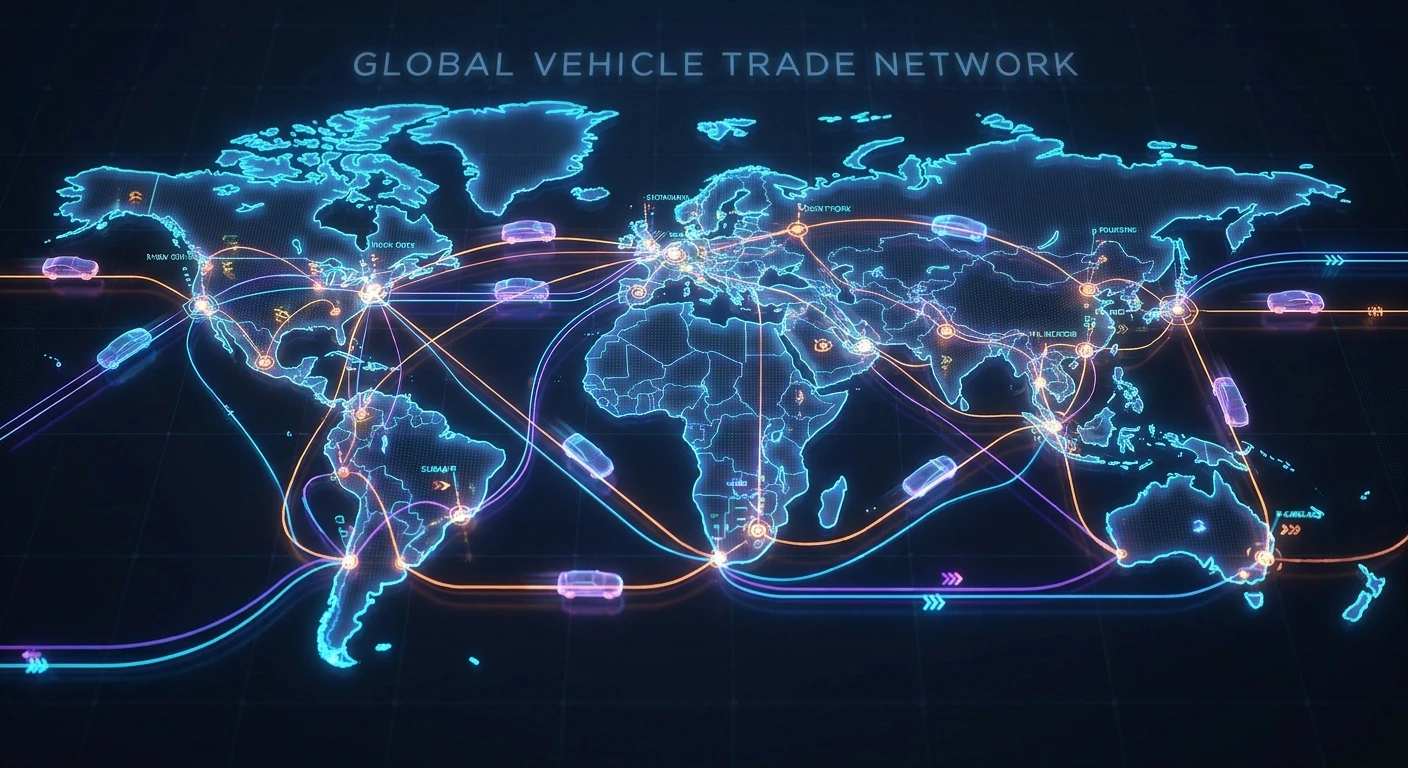
Here is a quick look at how different regions handle these import taxes:
| Market Region | Standard Duty Rate | Consumer Impact Level |
|---|---|---|
| United States | 2.5% (Cars) / 25% (Trucks) | Moderate to Severe for light trucks |
| European Union | 10% standard (higher for specific EVs) | High impact on foreign luxury brands |
| Southeast Asia | Up to 80% depending on origin | Massive barrier to entry for buyers |
So, how exactly do the authorities figure out how much you owe? It is not just a random guess. The calculation process is highly structured and incredibly rigid.
- The Initial Customs Value Assessment: Customs agents do not care what you claim you paid for the car. They look at the official invoice, the cost of shipping, and the insurance. This combined number is the base value used for taxation.
- The Engine Capacity or Battery Multiplier: Many countries add an extra excise tax based purely on the size of the internal combustion engine or the total capacity of the battery pack. Bigger engines mean exponentially higher fees.
- The Final Value-Added Tax Application: This is the part that hurts the most. The government takes the base value, adds the import duty, adds the excise tax, and then applies a massive 15% to 25% VAT on top of the entire bloated sum. It is essentially a tax on a tax.
The Origins of Trade Protectionism
To truly grasp why we pay these ridiculous fees, we have to look back at the early 20th century. During the 1920s and 1930s, the world was gripped by economic panic. Politicians believed that the best way to save local jobs was to build massive invisible walls around their borders. They heavily taxed anything coming from the outside. The automotive industry, spearheaded by giants like Henry Ford, was a major source of national pride and employment. Protecting those factories from cheap overseas competition became a matter of national security. Governments aggressively implemented border taxes to ensure citizens bought locally made machines.
The Evolution of Vehicle Import Taxes
After World War II, the global economy needed rebuilding, and extreme protectionism slowly gave way to international trade agreements. We saw the birth of organizations aiming to lower barriers, but cars remained a highly sensitive sticking point. A famous example is the infamous “Chicken Tax” of 1963 in the United States. Believe it or not, a dispute over cheap American chicken exported to Europe led the US government to slap a 25% tax on imported light trucks. That decades-old ruling is the exact reason why foreign automakers struggle to sell pickup trucks in the American market to this very day. It completely shifted the manufacturing landscape.
The Modern State of Global Car Duties
Fast forward to the present day, and the landscape is wilder than ever. Geopolitics is the new driving force behind these taxes. Nations are battling for dominance over the green energy transition, specifically fighting over the supply chains for electric vehicle batteries. If a country feels a foreign competitor is unfairly subsidizing their auto industry, they will aggressively raise border taxes to level the playing field. As consumers, we are caught in the crossfire of this massive economic war, constantly paying the price for political posturing.
The Economics Behind Import Levies
Let’s talk about the hard economics without getting lost in academic jargon. When a government imposes an import fee on a vehicle, they are intentionally distorting the natural forces of supply and demand. The primary goal is to make the imported good artificially expensive so the domestic alternative looks better. Economists call the negative side effect of this a “deadweight loss.” This means that the overall efficiency of the market drops. Consumers end up paying higher prices, buying fewer cars, and overall economic welfare shrinks. The government collects some revenue, and domestic factories might save some jobs, but the average person is financially worse off.
Supply Chain Mechanics and Price Elasticity
You also need to understand price elasticity—basically, how much you are willing to stretch your wallet when a car gets more expensive. Cars are incredibly complex machines built from thousands of components crossing multiple borders before final assembly. If a country taxes imported steel or foreign microchips, the cost of manufacturing a “domestic” car skyrockets too. The manufacturer passes that cost onto you.
- The Multiplier Effect: Taxes compound rapidly because border agents calculate the standard VAT based on the total sum of the vehicle’s cost plus the shipping plus the initial duty.
- Inflation Correlation: Higher duties increase transportation costs for logistics companies, meaning the price of everyday groceries transported by those trucks goes up too.
- Component Bottlenecking: Even localized production lines grind to a halt if a specific imported wire harness or sensor gets held up by sudden tariff hikes, limiting supply and driving up dealership markups.
- Wage Stagnation: Over-protecting a local auto industry often reduces the competitive pressure to innovate, leading to slower technological advancement and suppressed wage growth in the manufacturing sector.
Step 1: Research Local Customs Regulations
Before you even think about wiring money overseas, you must rigorously research the specific import regulations of your home country. Go straight to the official government customs website. Find out exactly which emission standards are required and whether the specific model year you want is even legally allowed across the border. Ignorance here will result in your car being crushed or deported.
Step 2: Calculate the Base Import Duty
Locate the Harmonized System (HS) code for the specific type of vehicle you are buying. This international code determines the exact baseline tax rate. A four-door sedan will have a different code than a pickup truck or a purely electric vehicle. Once you have the code, you can calculate the exact percentage they will take from the purchase price.
Step 3: Factor in Environmental and Excise Taxes
Many people forget this step. Authorities love to penalize large, gas-guzzling engines. You need to calculate the displacement of the engine or the weight of the vehicle to see if you trigger a luxury tax, a gas-guzzler tax, or a specific environmental levy. These can sometimes double the total tax bill if you are not careful.
Step 4: Secure Transport and Brokerage
Listen, you might think you can handle the paperwork yourself to save a few bucks. I get it. But customs agents are notoriously strict, and a single missing signature can leave your car sitting at the port racking up daily storage fees known as demurrage. Hire a licensed customs broker. They navigate the bureaucracy daily and will save you a massive headache.
Step 5: Prepare Documentation and Homologation
Gather the original title, the bill of sale, the export certificate, and the certificate of origin. You will also need to prepare for homologation—the process of physically modifying the car to meet local safety standards. This might mean swapping out amber turn signals, changing the speedometer from miles to kilometers, or installing different seatbelts.
Step 6: Pay the Required Duties Promptly
Once the car arrives at the port, the clock starts ticking. The authorities will issue a massive bill for the combined duties, taxes, and handling fees. You must pay this immediately. Delays will incur steep financial penalties and keep your vehicle locked in a high-security impound lot.
Step 7: Finalize Registration and Plates
After the customs agency clears the vehicle and hands over the release documents, you still have to visit your local transportation authority. You will present the customs clearance paperwork, pass a final physical inspection, pay your local registration fees, and finally secure your license plates. Only then can you legally drive your new asset on public roads.
Myths & Reality
Myth: Foreign manufacturers pay the tariff out of their own pockets to keep prices low.
Reality: Businesses do not absorb these massive taxes. The costs are almost entirely passed down to you, the consumer, via significantly higher retail pricing on the showroom floor.
Myth: Buying a locally assembled car means you completely bypass the effects of import taxes.
Reality: Domestic manufacturers rely heavily on global supply chains. They use imported batteries, specialized glass, and foreign microchips. When those parts are taxed at the border, the sticker price of the “domestic” car goes up anyway.
Myth: Free trade agreements eliminate all vehicle taxes instantly.
Reality: These agreements contain incredibly complex “rules of origin.” A car must have a very high percentage of locally sourced parts to qualify for the zero-duty rate. If it falls short, standard taxes apply.
Myth: Customs brokers are a waste of money and you can easily do it all yourself.
Reality: A tiny paperwork error can result in massive daily storage fees at the port that far exceed what a professional broker would have charged you in the first place.
What exactly are these vehicle taxes?
They are specialized financial penalties placed on cars, trucks, and automotive parts crossing international borders to control trade flow.
Do they apply to used cars?
Yes. Authorities will calculate the duty based on a standardized book value or the auction invoice, whichever is higher.
Can I avoid paying them?
Legally, no. The only exceptions are usually for active military personnel, high-level diplomats, or specific returning residents under strict conditions.
Do electric vehicles face the same rates?
Often, they face wildly different rates. Some countries offer tax breaks for EVs, while others heavily penalize them due to geopolitical disputes over battery sourcing.
Who collects this money?
Your national customs and border protection agency collects the funds before passing them into the federal treasury.
Are rates going up or down?
Globally, they are trending aggressively upward as nations fight to protect their domestic manufacturing sectors.
How does this affect leasing?
Lease payments skyrocket because the capitalized cost of the vehicle is much higher when the dealership has to cover import duties.
Navigating auto tariffs is not just about filling out paperwork; it is about actively protecting your wealth from hidden global taxes. By understanding how these levies function, researching the exact percentages, and knowing when to hire a broker, you can make highly strategic purchasing decisions. Do not let border taxes drain your bank account—take control of the process, do the math upfront, and drive away knowing you outsmarted the system. Ready to calculate your exact import costs? Contact a certified customs broker today and get your vehicle cleared without the financial stress!