
The Enduring Genius of willie mitchell
When you drop the needle on a classic Al Green record, the very first thing that hits your chest is the warm, unmistakable groove crafted entirely by willie mitchell. I remember the exact moment I truly understood his brilliance. I was hiding out from the winter cold in a tiny, subterranean vintage record shop near Pochaina station in Kyiv. The power grid was spotty, so the owner was running a battery-powered turntable. He threw on a battered pressing of Ann Peebles’ “I Can’t Stand the Rain.” Through the static and the chill of the concrete room, those opening timbale strikes and the massive, fat horn section practically reorganized my heartbeat. It felt like absolute magic.
Even now, as we navigate the fast-paced, AI-driven landscape of 2026, finding that genuine, physical analog warmth feels more crucial than ever. We crave music that breathes, music made by humans sitting in a room together, looking each other in the eye. That was his ultimate thesis: music should be felt before it is heard. He wasn’t just hitting a record button; he was capturing the distinct air, humidity, and emotion of a specific moment in Memphis, Tennessee. If you want to understand how rhythm and blues transitioned into the silky, deeply emotional soul music of the 1970s, you have to study the man behind the mixing board.
The Architecture of the Perfect Groove
The magic captured at Hi Records was never an accident. It was the result of intense discipline, visionary leadership, and a deep understanding of musical space. As a bandleader, he knew that the silence between the notes carried just as much weight as the notes themselves. To build a sound that could dominate the charts and stand the test of decades, he relied heavily on a specific formula of tight rhythm and soaring vocals. His approach brings immense value to anyone studying music production, audio engineering, or simply looking to refine their ear for quality sound.
If you break down the components of his productions, you find a masterclass in dynamic range. Here is exactly how he treated the core elements of his studio bands:
| Musical Element | The Signature Approach | Impact on the Listener |
|---|---|---|
| The Drum Kit | Dampened snares, incredibly tight tuning, minimal cymbal crashes. | Creates a hypnotic, driving pocket that never overshadows the singer. |
| The Bass Line | Played deep behind the beat, locking perfectly with the kick drum. | Forces the listener to physically sway; builds the foundation of the groove. |
| The Horn Section | Arranged like a secondary vocal choir, responding directly to the lead singer. | Adds massive emotional punctuation and soaring melodic counterpoints. |
The true benefit of understanding this methodology is realizing that pure restraint creates the biggest impact. If you listen to modern pop tracks compared to his 1970s classics, you will notice a distinct difference in breathing room. He implemented several strict studio philosophies to guarantee this outcome:
- The Groove Dictates the Emotion: The rhythm section had to establish an unbreakable, locked-in groove for hours before the singer even stepped up to the microphone. The foundation had to be solid enough to carry any vocal gymnastics.
- Vocal Intimacy is King: He forced powerful belters to step exceptionally close to the microphone and sing softly. This created an illusion that the vocalist was whispering directly into the listener’s ear, a technique that completely changed Al Green’s career.
- Analog Imperfection is Beautiful: He refused to sanitize the recordings. If a floorboard creaked or an amp buzzed slightly, he left it in the mix, knowing it added to the raw humanity of the track.
Origins of the Memphis Sound
Long before he became an iconic producer, he was blowing his trumpet in the smoky jazz and R&B clubs of Memphis. Born in Ashland, Mississippi, he moved to Memphis early on and immediately absorbed the city’s rich musical tapestry. By the late 1950s, he had formed his own band and became a highly respected local bandleader. He understood the psychology of a live audience. He knew exactly what tempo would get people on the dance floor and what chord changes would keep them buying drinks at the bar. This street-level education in crowd control heavily influenced his later career. He wasn’t an isolated studio nerd; he was a working musician who understood the fundamental biological reactions humans have to rhythm.
The Evolution of Hi Records
His transition from a live performer to an executive and producer completely changed the trajectory of Southern soul music. When he took the reins at Hi Records and Royal Studios, he didn’t clean house; he curated. He assembled the legendary Hi Rhythm Section, featuring the incredibly talented Hodges brothers (Teenie on guitar, Charles on organ, Leroy on bass) and drum masters like Al Jackson Jr. and Howard Grimes. This unit became his secret weapon. He drilled them relentlessly until they could play as a single, breathing organism. Under his guidance, Hi Records evolved from a rockabilly and instrumental label into a global powerhouse of smooth, sophisticated soul music that rivaled Motown and Stax.
The Modern State of Analog Soul
Fast forward to the year 2026, and the industry is looking backward to move forward. Top-tier producers are spending thousands of dollars on boutique analog gear, desperate to emulate the exact sound he achieved with basic 8-track tape machines. His legacy survives not just in hip-hop samples—though artists like Wu-Tang Clan and Kendrick Lamar have borrowed heavily from his catalogs—but in the fundamental way modern neo-soul artists approach recording. The “Royal Studios Sound” remains the gold standard for anyone trying to capture genuine emotional resonance rather than a sterile digital copy.
The Acoustics of Royal Studios
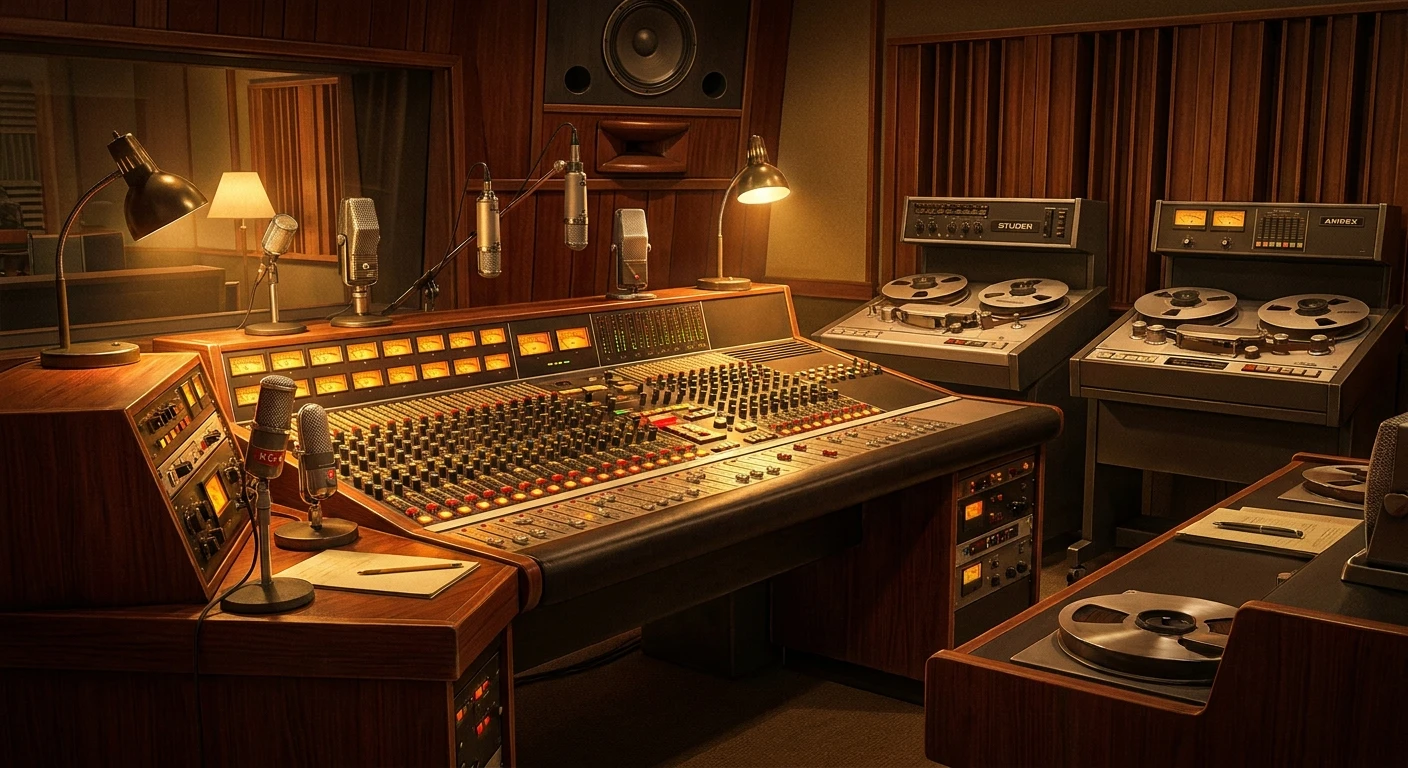
To truly appreciate his work, you have to look at the physical space where the magic happened. Royal Studios wasn’t a pristine, high-tech facility; it was an old, converted movie theater on South Lauderdale Street. The room itself was essentially an instrument. The most famous architectural anomaly was the sloping floor. Originally designed so moviegoers could see the screen, this slope prevented standing sound waves from building up. Bass frequencies traveled smoothly across the room without turning into muddy echoes, giving the recordings their incredibly tight low-end. He utilized the natural decay of the theater walls to create a reverb that no digital plugin can accurately replicate.
Microphone Placement and Tape Saturation
He was a master of maximizing limited technology. Before endless digital tracks were available, every microphone placement was a crucial, permanent decision. He relied heavily on RCA 77DX ribbon microphones, which naturally rolled off harsh high frequencies, giving the horns and vocals a buttery, smooth texture. Furthermore, he pushed the limits of magnetic recording tape.
- Tape Compression: By driving the audio signals slightly too hot into the tape machine, he achieved natural, musical compression. This rounded off aggressive drum transients and glued the track together.
- Harmonic Distortion: Pushing analog circuitry adds even-order harmonics to the sound, which the human brain interprets as “warmth” and “fatness.”
- Bleed and Spill: Because the band played together in one room, the drum microphones picked up the bass, and the horn microphones picked up the guitar. This “bleed” meant the instruments literally could not be separated, forcing a cohesive mix.
- Acoustic Baffling: He strategically used burlap and rudimentary wooden baffles to control cymbal wash, ensuring the high-end frequencies never clashed with the delicate vocal performances.
Your 7-Day Hi Records Listening Plan
Reading about music is one thing; experiencing it is another. To fully grasp his genius, follow this curated, week-long listening guide. Dedicate 30 minutes a day to these sessions on the best speakers or headphones you own.
Day 1: The Al Green Essentials
Start with “Let’s Stay Together” and “Love and Happiness.” Don’t just listen to the famous vocal melodies. Focus your attention entirely on the kick drum and the bass guitar. Notice how they act as a single, inseparable rhythmic force. This is the absolute peak of the Willie Mitchell production formula.
Day 2: Ann Peebles and the Raw Female Vocal
Play the album “Straight from the Heart.” Listen to “I Can’t Stand the Rain.” Pay close attention to the stark, empty spaces in the arrangement. Notice how the sparse use of electric timbales creates tension, and how the massive horn stabs provide the emotional release.
Day 3: The Instrumentals
Before his vocalists made him famous, he cut incredibly funky instrumental tracks. Listen to “Soul Serenade” and “20-75.” This is where you hear him functioning as a bandleader. The grooves are grittier, the brass is louder, and you can hear the raw DNA of the Hi Rhythm Section being formed.
Day 4: Syl Johnson’s Gritty Grooves
Explore the album “Diamond in the Rough.” Syl Johnson brought a harsher, more blues-oriented edge to Royal Studios. Listen to how the production adapts to a rougher voice, using heavier guitar licks from Teenie Hodges while maintaining the unmistakable polished pocket underneath.
Day 5: O.V. Wright’s Deep Soul
Dive into “Into Something (Can’t Shake Loose).” O.V. Wright was a master of deep, melancholic southern soul. Pay attention to the string arrangements. Notice how they swell underneath the vocal without ever stepping on the singer’s toes, adding a cinematic quality to the pain in the lyrics.
Day 6: The Horn Section Study
Create a playlist of just the horn-heavy intros from the Hi Records catalog. The Memphis Horns and the Hi-Ties were unique. Listen to the vibrato, the precise cut-offs, and the sheer volume they pushed into the ribbon microphones. It is a masterclass in brass arrangement.
Day 7: Building Your Own Analog Vibe
Take what you’ve learned and apply it to your own listening habits. Put on a modern digital pop track, then immediately switch back to an Al Green classic. Compare the “air” in the room. You will permanently change the way you evaluate audio quality, recognizing the difference between a programmed beat and a breathing, human rhythm section.
Myths vs. Reality
When an artist achieves legendary status, rumors inevitably overshadow facts. It is time to clear the air about his studio operations.
Myth: He only achieved major success because he randomly stumbled upon Al Green on the road.
Reality: While Al Green was his most famous collaborator, the producer had already built a highly successful instrumental career and established the hit-making machinery at Royal Studios long before Green ever walked through the doors.
Myth: The Memphis soul sound was entirely improvised during loose, drug-fueled jam sessions.
Reality: He was a notoriously strict disciplinarian. He demanded absolute perfection from his musicians, often making them play the same groove for hours until it reached a meditative, flawless state before hitting the record button.
Myth: Royal Studios was outfitted with the most expensive, state-of-the-art equipment available at the time.
Reality: The studio gear was actually quite outdated compared to the massive consoles in New York and London. He relied on older 8-track machines and tube technology, proving that the ear of the engineer is vastly more critical than the price tag of the equipment.
Who is willie mitchell?
He was an American trumpeter, bandleader, and highly influential record producer, best known for running Hi Records and architecting the legendary Memphis soul sound of the 1970s.
What was his primary instrument?
Before moving behind the mixing desk, he was an accomplished trumpet player who led one of the most popular live R&B bands in the Memphis area.
Where did he produce his biggest hits?
The vast majority of his legendary productions took place at Royal Studios, located in a converted movie theater in South Memphis, Tennessee.
Did he write songs too?
Yes, he was heavily involved in the songwriting process, often co-writing massive hits, including sharing writing credits on classics like “Let’s Stay Together.”
Who are the Hi Rhythm Section?
They were the legendary house band at his studio, primarily consisting of the Hodges brothers (Teenie, Charles, Leroy) and phenomenal drummers like Howard Grimes and Al Jackson Jr.
Why did he use a sloped studio floor?
Because the studio was an old theater, the floor naturally sloped. He realized this prevented bass frequencies from becoming muddy, creating a naturally perfect acoustic environment for tight rhythm tracks.
Can you still visit his studio?
Yes, Royal Studios is still operational today and is run by his family. It remains a pilgrimage site for musicians worldwide looking to capture a piece of that historic magic.
Why is his sound still sampled so often?
Hip-hop producers constantly sample his work because the drum breaks are incredibly tight, and the warm, analog tape saturation provides a massive, ready-made texture for modern beats.
The legacy of this incredible producer is stamped permanently onto the blueprint of modern music. He proved that technology should serve human emotion, not the other way around. Next time you need to cool down, find your center, or just feel a genuine groove, put on a Hi Records classic. Drop your favorite track produced by him in the comments below, and let’s keep the analog spirit alive!